

Ecommerce SEO Services That Compound
Product page, category, and technical SEO for stores that want organic revenue, not just rankings.



Who this is for
If any of this sounds like you, we should talk.
Your store gets traffic but organic barely contributes
Paid ads carry the whole revenue load. Every month the budget resets to zero. You want a channel that compounds instead of one you rent.
Your product pages are invisible in search
Thin descriptions, manufacturer copy duplicated across a hundred SKUs, no schema. Shoppers search for exactly what you sell and land on a competitor.
You replatformed and rankings slid
A theme change, a migration, or a new domain broke URLs and lost indexed pages. Organic revenue dipped and never came back on its own.
You run Shopify and the SEO apps are not moving the needle
You installed the apps, filled in the meta fields, and nothing changed. The real issues live in your category architecture and templates, not in an app setting.
What changes for you
Outcomes you can point to, not features you can ignore.
- Category and collection pages that rank for the commercial queries shoppers actually type.
- Product page SEO that works at catalog scale: titles, descriptions, schema, and internal links by template, not by hand.
- Technical foundations (crawlability, faceted navigation, Core Web Vitals) that stop capping your rankings.
- Product schema that earns rich results (availability, reviews, breadcrumbs) where your listings qualify.
- An organic revenue channel that reduces your dependence on paid traffic.
What is included
Scope, organized by phase.
Audit (Phase 1 of 4)
Phase 1
Audit
What we lock down in this phase before moving on.
- Full store crawl and indexation review
- Search Console and GA4 analysis (last 12 months)
- Keyword and competitor mapping by category
- Faceted navigation and duplicate content review
How an engagement works
From hello to handoff, step by step.
Store audit
You give us read access to Search Console, analytics, and the store. We crawl the catalog and map where organic revenue is leaking.
Prioritized roadmap
You get a ranked plan: ranking blockers first, then template-level wins, then content. Every item tied to a query set with real demand.
Technical and template fixes
We fix crawlability, schema, and page speed at the template level, so one change improves hundreds of product pages at once.
Content and internal links
Category copy, buying guides, and comparison pages built to intent, wired into an internal linking structure that pushes authority to money pages.
Measure and iterate
Monthly reporting against rankings, traffic, and assisted revenue. We double down on what moves and cut what does not.
Case study
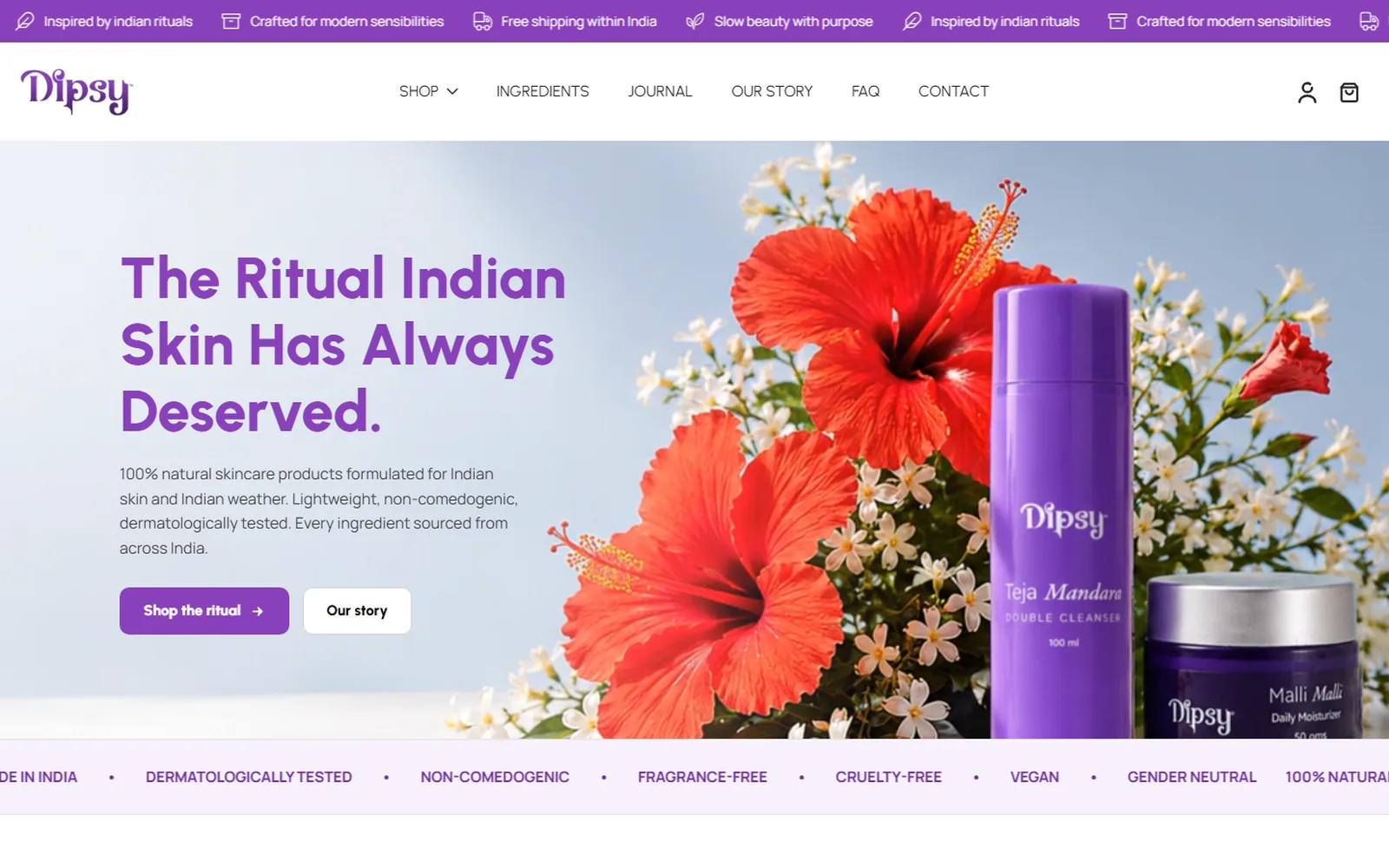
Dipsy
A continuous SEO program growing the brand's organic visibility, with a Shopify store that is cleanly crawlable and indexable and content mapped to the searches its future customers already type.
Dipsy is a founder-led clean skincare brand selling through its own Shopify store, launching with a tight product line into a crowded, high-trust category. Shoppers research ingredients before they buy, and the brand needed to show up for those searches from a standing start, without paid spend carrying the whole load.
WitsCode runs Dipsy's SEO as an ongoing program. Technical SEO on the Shopify storefront came first: crawlability, site structure, page speed signals, and clean metadata. From there the work is keyword and content led, mapping the terms a botanical skincare shopper searches, from ingredient questions to product and category intent.
Why us
What you get with WitsCode that you don't get elsewhere.
We build stores, so we can fix stores
Most SEO agencies hand your developer a PDF of recommendations. We open the theme code and ship the fix ourselves, on Shopify, WooCommerce, or custom stacks.
Catalog scale, not page by page
Optimizing one product page at a time never catches up. We work at the template and architecture level, so a single change lifts every SKU that shares it.
We track where search is going
Shoppers now ask AI assistants what to buy. We built a free AI Visibility Checker to see how those answers form, and we fold that into every ecommerce SEO engagement.
WitsCode rebuilt our Shopify store so it finally converts the traffic we were already getting. They understand speed and storytelling in equal measure, and the store has been a real growth lever since launch.
Frequently asked
Questions before you reach out.
Ecommerce SEO covers the technical health of your store (crawlability, speed, indexation), the architecture of your categories and collections, product page optimization at template scale, structured data for rich results, and content that captures buying intent. The goal is a store search engines can read in full and rank for commercial queries, not a batch of meta tags.
The fundamentals overlap, but stores add problems normal sites never face: faceted navigation creating thousands of near-duplicate URLs, products going in and out of stock, seasonal catalogs, and template-driven pages that must be optimized in bulk. An agency that mostly does blogs will miss the issues that actually cap a store's rankings.
Yes. Shopify SEO is a core part of our practice, including theme-level fixes, collection architecture, metafield-driven content, and working around Shopify's URL structure constraints. We also work on WooCommerce and custom storefronts, and we tell you honestly which limitations come from the platform versus the setup.
Technical fixes can show movement within weeks once Google recrawls, while category and content work typically compounds over three to six months. Timelines depend on your starting authority and competition. We front-load the ranking blockers so the fastest wins land first, and every monthly report shows exactly what moved.
No. Conversion rate optimization and full ecommerce growth retainers sit with Pixel Tree, our ecommerce growth partner. When your store needs CRO or a broader growth program, we refer you to them and stay focused on search. You get a specialist on each side of the funnel instead of one agency stretching to cover both.
Yes. Product and category copy is part of scope where it matters for rankings, written to search intent and your brand voice rather than stuffed with keywords. For very large catalogs we build a template and priority system so the pages with real search demand get human attention first.
Yes, and arguably more. AI assistants and Google's AI Overviews build their shopping answers from crawlable, well-structured sources, so the stores that win traditional SEO are the ones getting cited. We treat AI visibility as part of the same job, and you can check where your store stands today with our free AI Visibility Checker.
Ready to make search your store's next revenue channel?
Start a project. You get a scoped ecommerce SEO plan within 48 hours, mapped to your catalog and competition.