

Flutter App Development Company
Production iOS and Android apps designed, built, and launched from one Flutter codebase.



Who this is for
If any of this sounds like you, we should talk.
You need both stores, not one
Your users are split across iPhone and Android, and launching on one platform means writing off half your market. You want both, without doubling the budget.
You were quoted two native teams
A Swift build plus a Kotlin build means two codebases, two backlogs, and every feature paid for twice. There is a better way to spend a seed round.
Your web MVP needs to become an app
You validated demand in the browser. Now retention, push notifications, and app store presence are the growth levers, and you need a product on phones.
Your current app is stuck
You have a half-finished or agency-abandoned Flutter codebase. You need someone to audit it, stabilize it, and get it shipping again.
What changes for you
Outcomes you can point to, not features you can ignore.
- One Flutter codebase compiled to native iOS and Android, so every feature ships to both stores at once.
- Native-feeling performance: 60fps rendering, platform-correct navigation, and gestures users expect.
- App Store and Play Store submissions handled end to end, including review feedback and rejections.
- A CI pipeline that builds, tests, and distributes beta versions on every merge, so releases stop being events.
- A codebase your future in-house team can inherit: typed, documented, and structured for handover.
What is included
Scope, organized by phase.
Discovery (Phase 1 of 4)
Phase 1
Discovery
What we lock down in this phase before moving on.
- Product scoping and feature prioritization
- User flows and clickable Figma prototype
- Technical architecture and backend plan
- Store compliance review (Apple and Google guidelines)
How an engagement works
From hello to handoff, step by step.
Scope and prototype
We turn your idea into a prioritized feature list and a clickable prototype. You validate the flows before a line of Dart is written.
Architecture
We design the app structure, state management, and backend integration. One decision document, reviewed with you, before the build starts.
Sprint builds
Two-week sprints, each ending with a working build on your phone via TestFlight or Play internal testing. You see progress, not status reports.
Hardening
Device testing across screen sizes and OS versions, crash reporting, performance passes, and store compliance checks before submission.
Store launch
We prepare listings, screenshots, and metadata, submit to both stores, and handle review feedback until both apps are live.
Iterate
Post-launch, we watch analytics and crash data, fix what surfaces, and plan the next release cycle with you.
Case study
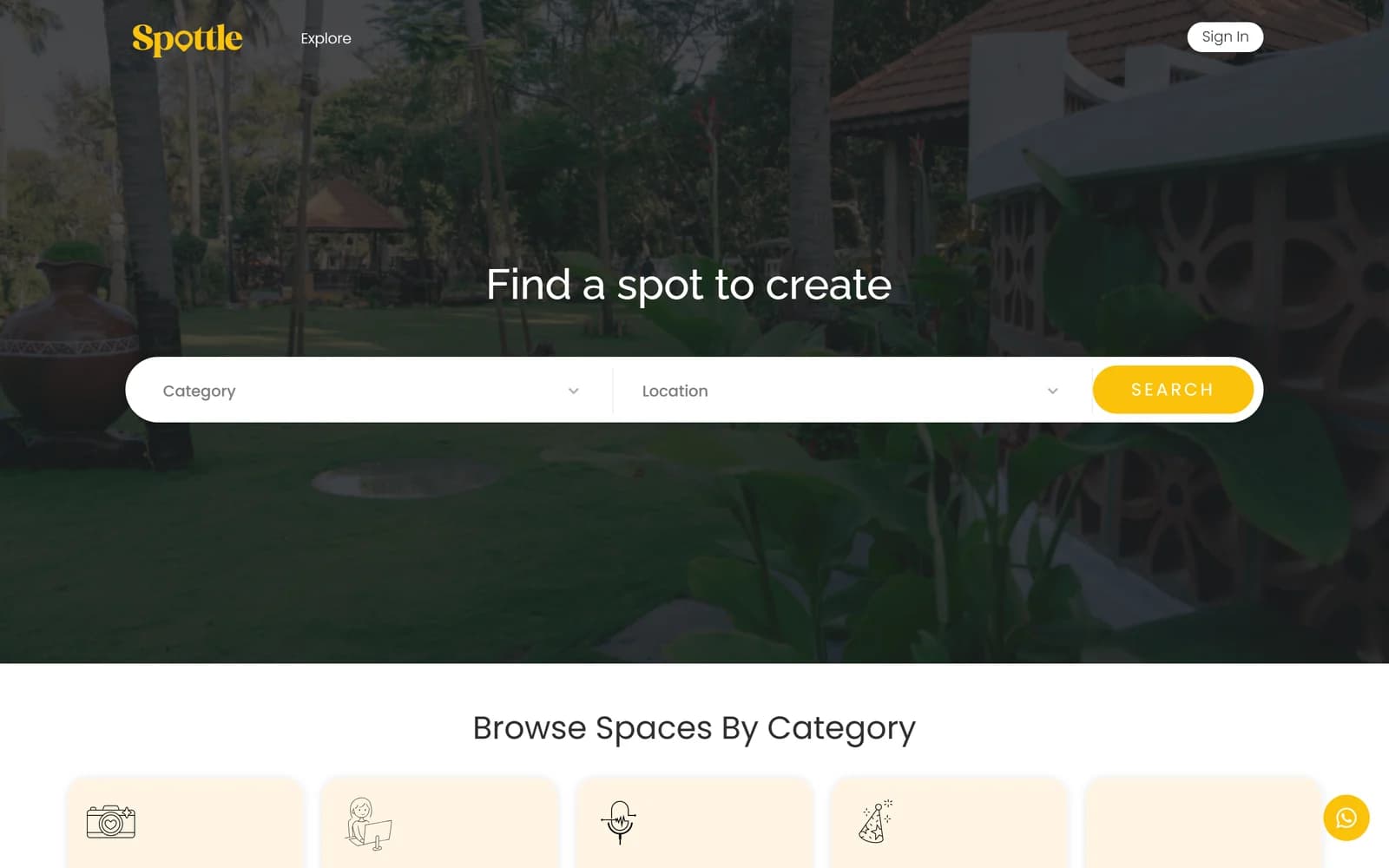
Spottle
A live two-sided marketplace serving guests and hosts across two cities, shipped by a single product team on a single timeline.
Spottle needed a two-sided booking product where guests reserve creative spaces by the hour and hosts manage listings, rates, and availability. It had to work flawlessly on phones, handle real payments and schedules, and launch across Chennai and Bangalore on a startup timeline.
We built the full Spottle platform as a mobile-first product: guest browsing by city and category, transparent hourly pricing, host onboarding and listing management, and the policy and content surfaces a live marketplace needs. The same product discipline we bring to Flutter builds, one codebase, one team, one release cycle.
Why us
What you get with WitsCode that you don't get elsewhere.
Product engineers, not body shops
We challenge scope, cut features that do not earn their build cost, and ship the version that gets you to users fastest. You get a product partner, not ticket takers.
Backend included
Most Flutter shops stop at the UI. We build the full stack: auth, data, payments, notifications, and the admin tooling you need to actually operate the app.
Built for handover
Typed Dart, documented architecture, and CI from day one. When you hire in-house engineers, they inherit a codebase they can work in, not a rewrite candidate.
WitsCode rebuilt our Shopify store so it finally converts the traffic we were already getting. They understand speed and storytelling in equal measure, and the store has been a real growth lever since launch.
Frequently asked
Questions before you reach out.
Flutter lets you build one codebase that compiles to native iOS and Android apps, which means one team, one backlog, and one release cycle instead of two, typically cutting build time and ongoing maintenance cost by a third or more compared with running separate Swift and Kotlin projects. For most startups and SMB products, that trade is decisive. Separate native builds still make sense for apps that lean heavily on platform-specific hardware or bleeding-edge OS features, and we will tell you if yours is one of them.
Flutter is production grade and runs some of the largest consumer apps in the world, including products from Google, BMW, Alibaba, and eBay, rendering at 60 frames per second with its own engine rather than a webview, so performance is native class rather than hybrid class. It is an excellent MVP tool precisely because the MVP does not need to be thrown away. The codebase you validate with is the codebase you scale with.
A focused first release typically takes 10 to 16 weeks from kickoff to both app stores, covering discovery, design, sprint builds, device testing, and store review, while a larger product with payments, multi-sided roles, or heavy backend work runs longer and we scope that honestly up front. The single biggest schedule variable is decision speed on your side. Founders who review builds weekly ship fastest.
Yes, when built properly: Flutter renders platform-correct navigation patterns, scroll physics, and transitions on each OS, and we implement adaptive behavior so an iPhone user gets iOS conventions while an Android user gets Material ones, rather than one uncanny hybrid on both. Users judge apps by feel, not framework. The apps that feel wrong are the ones where the developer ignored platform conventions, which is a craft problem, not a Flutter problem.
Yes, we regularly inherit Flutter projects from other agencies or departed freelancers, starting with a paid audit that maps the architecture, dependency health, test coverage, and store status, then giving you a straight verdict: stabilize and continue, refactor in stages, or rebuild. Most inherited codebases are salvageable. We only recommend a rebuild when continuing would genuinely cost more than starting clean, and we show the math.
Yes, end to end: we prepare developer accounts, listings, screenshots, privacy declarations, and review notes for both stores, submit the builds, and handle rejection feedback until both apps are approved and live, because store review is part of shipping, not an afterthought we leave to you. Apple rejections in particular are routine and fixable. We have been through the review process enough times to anticipate most of them before submission.
Yes, a mobile app is rarely just the app, so our Flutter engagements include the backend (typically Supabase or Firebase, or integration with your existing APIs), authentication, push infrastructure, payment wiring, and the internal admin views your team needs to operate the product day to day. You get one accountable partner for the whole system. No coordination tax between an app vendor and a backend vendor.
Ready to ship on both app stores from one codebase?
Start a project. We will scope your app, flag the risks, and give you a straight plan within 48 hours.