

How to improve a D2C brand: what we changed on Dipsy's Shopify store
E-commerceIndiaClean skincare and beauty (DTC)2026
300+ websites shipped, clients in 4 countries
- More Google clicks in September 2026 than August (1 to 27 of each month, Search Console)
- 24%
- More impressions on non-brand searches, 2,592 against 362, led by the ingredient articles
- 7x
- Countries the store now ships to, at weight-based courier rates
- 28
More Google clicks in September 2026 than August (1 to 27 of each month, Search Console)
More impressions on non-brand searches, 2,592 against 362, led by the ingredient articles
Countries the store now ships to, at weight-based courier rates
The challenge
Where we started.
Dipsy sells a two-step skincare ritual: Teja Mandara, a double cleanser, and Malli Malli, a lightweight moisturizer, plus a set of both. The old store looked good but did not do the selling. The homepage opened on a lifestyle photo and a tagline, with no line saying what Dipsy makes or who it is for. The product page showed a name, a price and one button. Reviews sat near the bottom of the page, the subscription offer was not where buyers decide, and the bundle page had no description. Leftover demo content from the theme was still in the build, including a placeholder blog name in the main navigation. And the store already earned search traffic for its brand and its ingredient articles, so the rebuild had to keep every URL working.
Our approach
What we built.
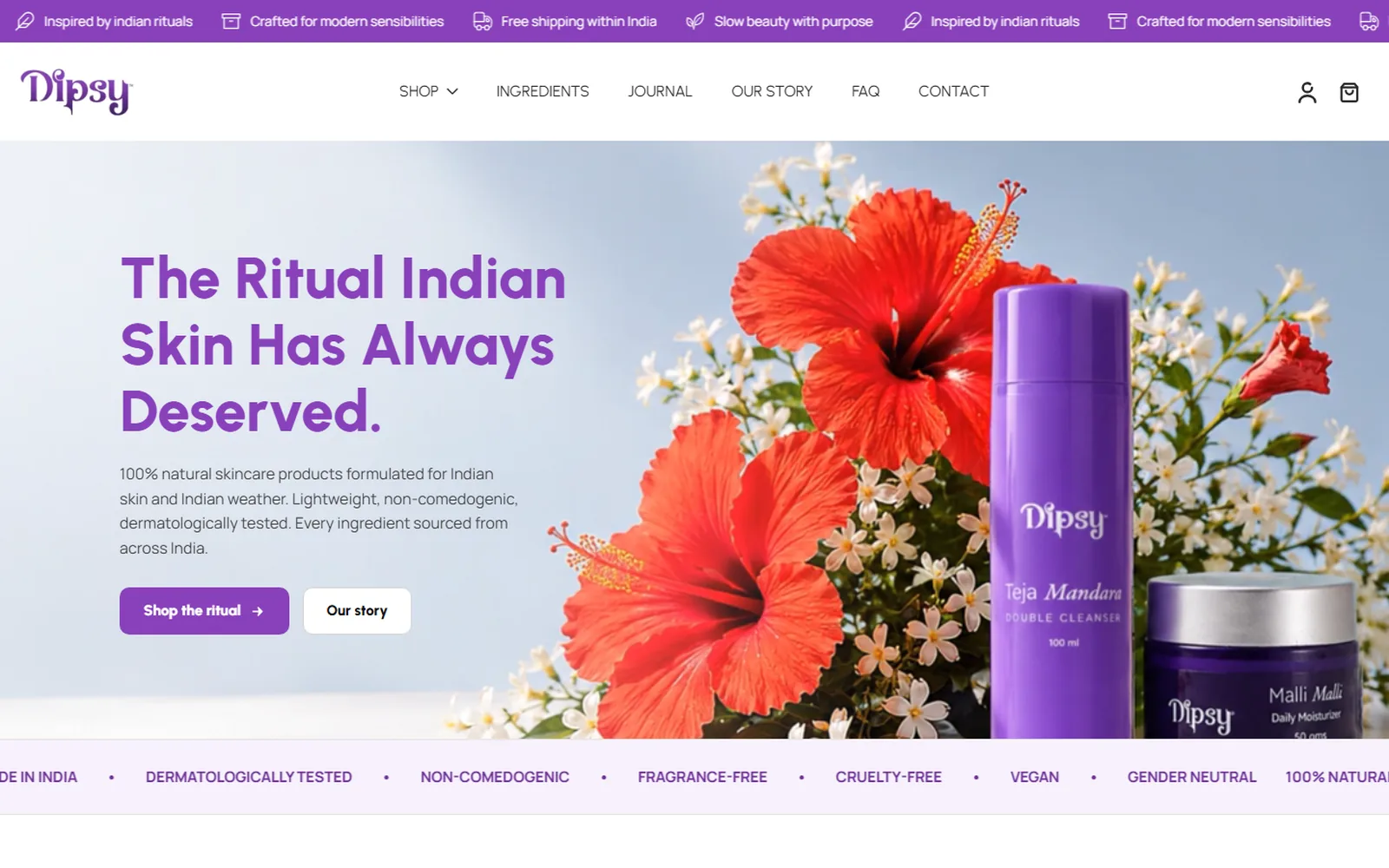
Lead with the promise. The homepage now says what Dipsy is in one headline, backs it with a proof line (natural, formulated for Indian skin and weather, dermatologically tested) and offers two actions: shop the ritual or read the story. The navigation follows how people shop: Shop, Ingredients, Journal, Our story, FAQ and Contact. Shop opens a compact dropdown where each product card adds to the cart in one tap.
Make the product page do the selling. The buy box answers the questions a shopper has, in the order they have them: what it is and what size, the one-line benefit, the live star rating, the price with taxes and free India shipping stated, three proof points, the purchase choice, stock and dispatch time, then trust badges. Below it, the page explains how to use the product morning and night, introduces each botanical, pairs it with the other product, and shows the full review feed and an FAQ.
Turn one order into a routine. Both products carry subscribe and save through Shopify Subscriptions, delivered every 4, 6 or 8 weeks at 10 percent off. It sits next to the one-time price as a simple choice, and it defaults to every 4 weeks so the button is never greyed out waiting for a frequency.
Give the bundle a reason to exist. The Complete Ritual is a native Shopify bundle of the cleanser and the moisturizer, priced below the two bought separately, with its own description, a clear list of what is inside and the saving shown next to the price. Each product page pairs with the other product and adds both in one tap, and the cart offers to switch a single product to the set.
Prove it with real voices. Hand-written testimonial blocks were replaced with real Judge.me reviews, and every rating on the site was matched to the live review count. The bundle shows no stars until it earns reviews of its own.
Sell the ingredients the brand is built on. A new Ingredient Library and an interactive map show the eight botanicals, where in India each one grows and which product it goes into. Shoppers can tap a pin and see the botanical behind each product.
Launch without losing search. The new theme was built on a duplicate, previewed, verified file by file and published with the previous theme kept as a rollback. Every old URL that earned search traffic redirects to its new home, and a post-launch crawl found zero broken internal links. Product, offer, breadcrumb, article and FAQ structured data, titles and meta descriptions on every page, one H1 per page, a journal index that links every article, articles rebuilt with related reading and product links, a text-based press page and a 404 page that helps people recover all went live with the new store.
Before and after
What changed.
Before screenshots show the previous theme as it ran until the relaunch, captured with current product data.
The homepage says what Dipsy is
The old first screen set a mood. The new one makes a promise, proves it and gives the shopper somewhere to go.
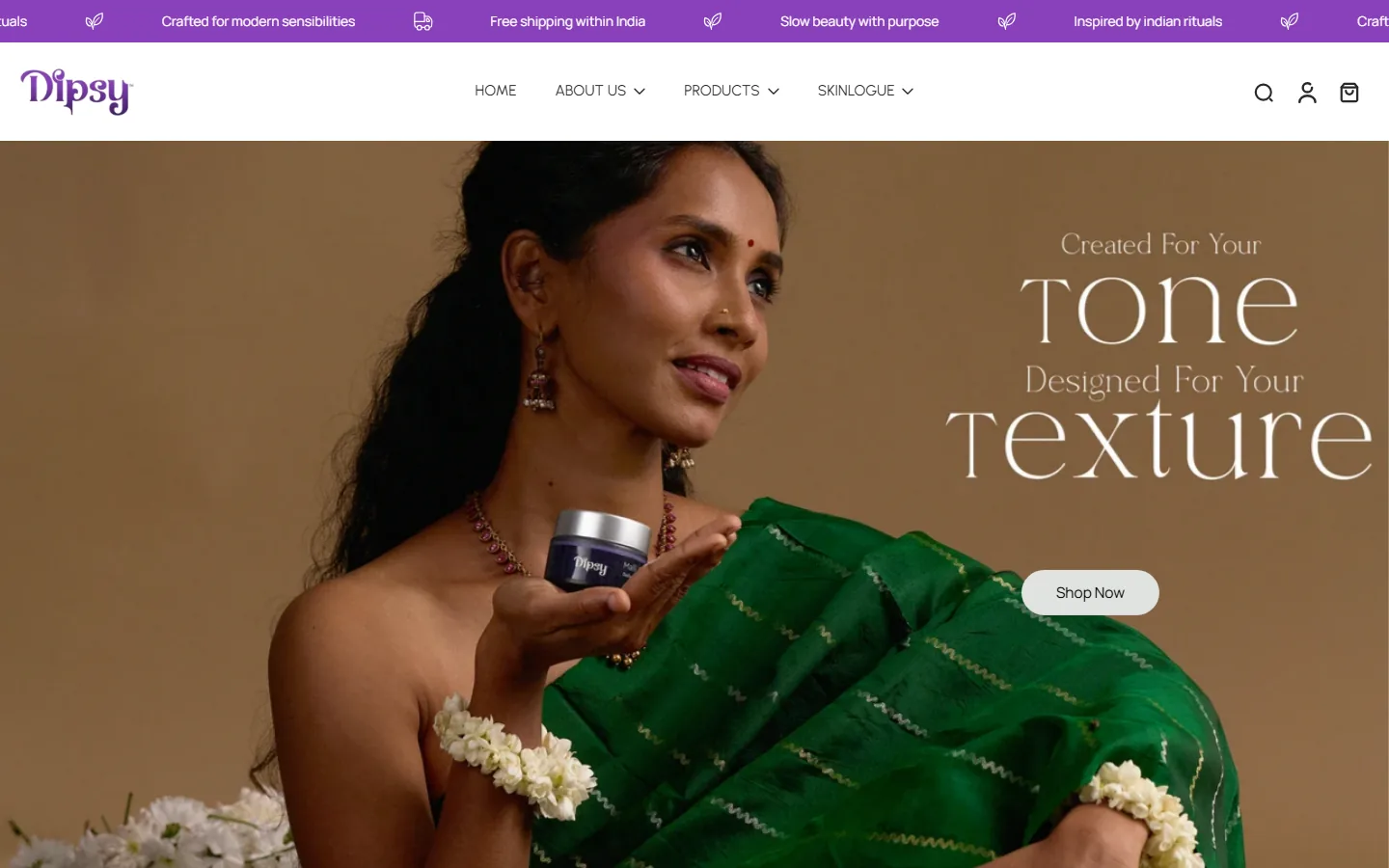
A lifestyle photo and a tagline. The navigation read Home, About us, Products and Skinlogue, a placeholder blog name left over from the theme.
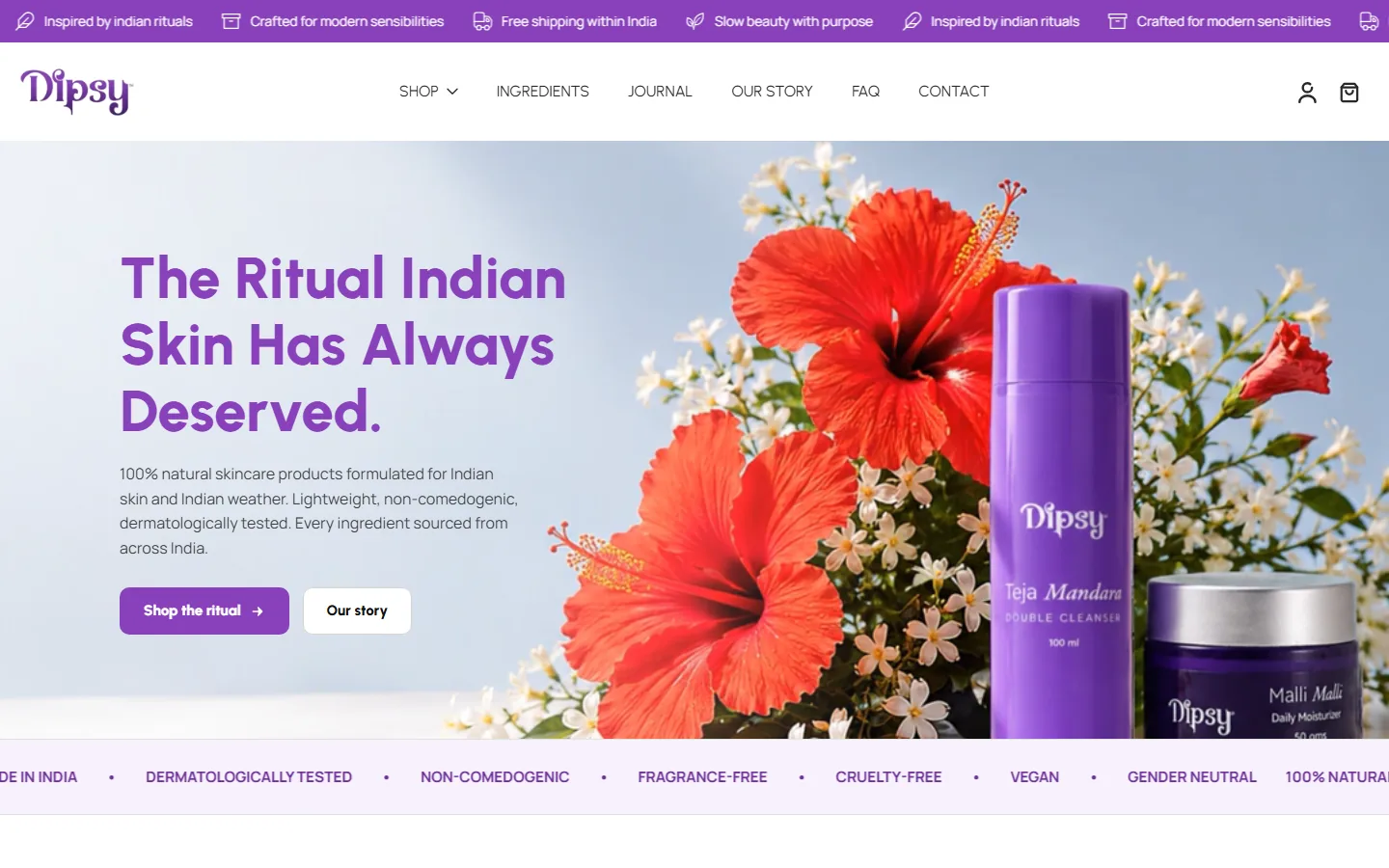
The promise, the proof and two clear actions, with the navigation rebuilt around Shop, Ingredients, Journal and Our story.
The first screen on a phone
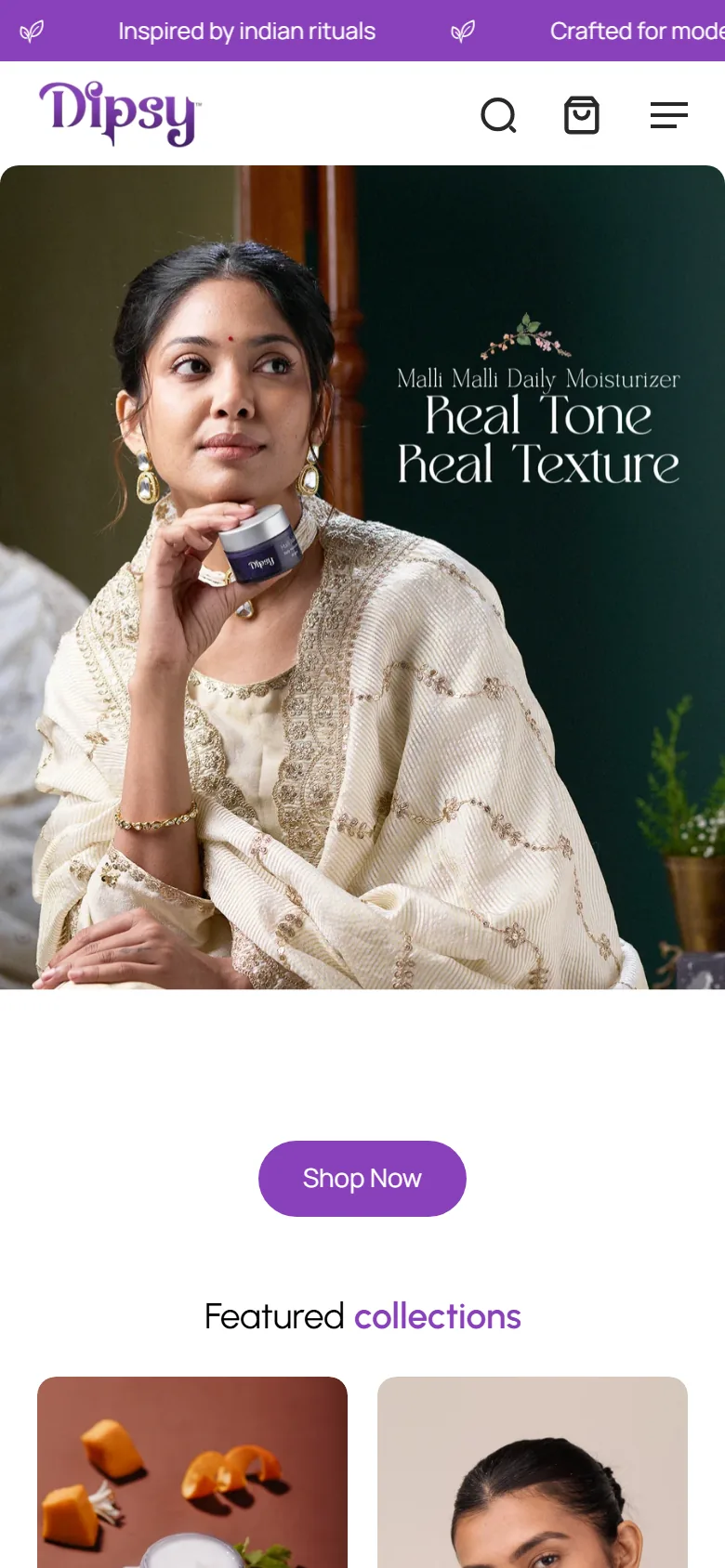
The tagline sat inside the photo and the only action came after it.

Headline, proof line and Shop the ritual, all before the first scroll.
The product page opens on the product
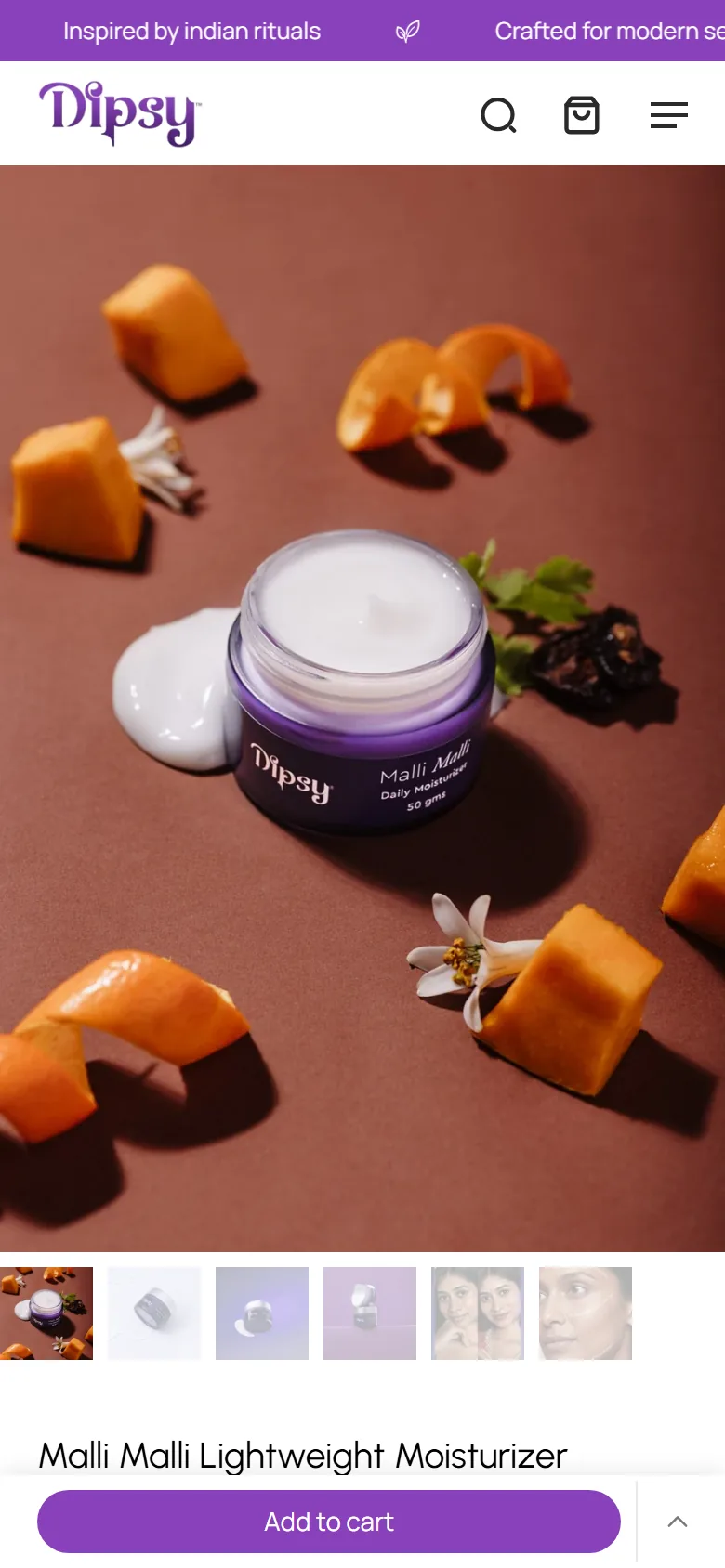
A full-bleed photo. The name started at the bottom of the screen, with no rating in view.
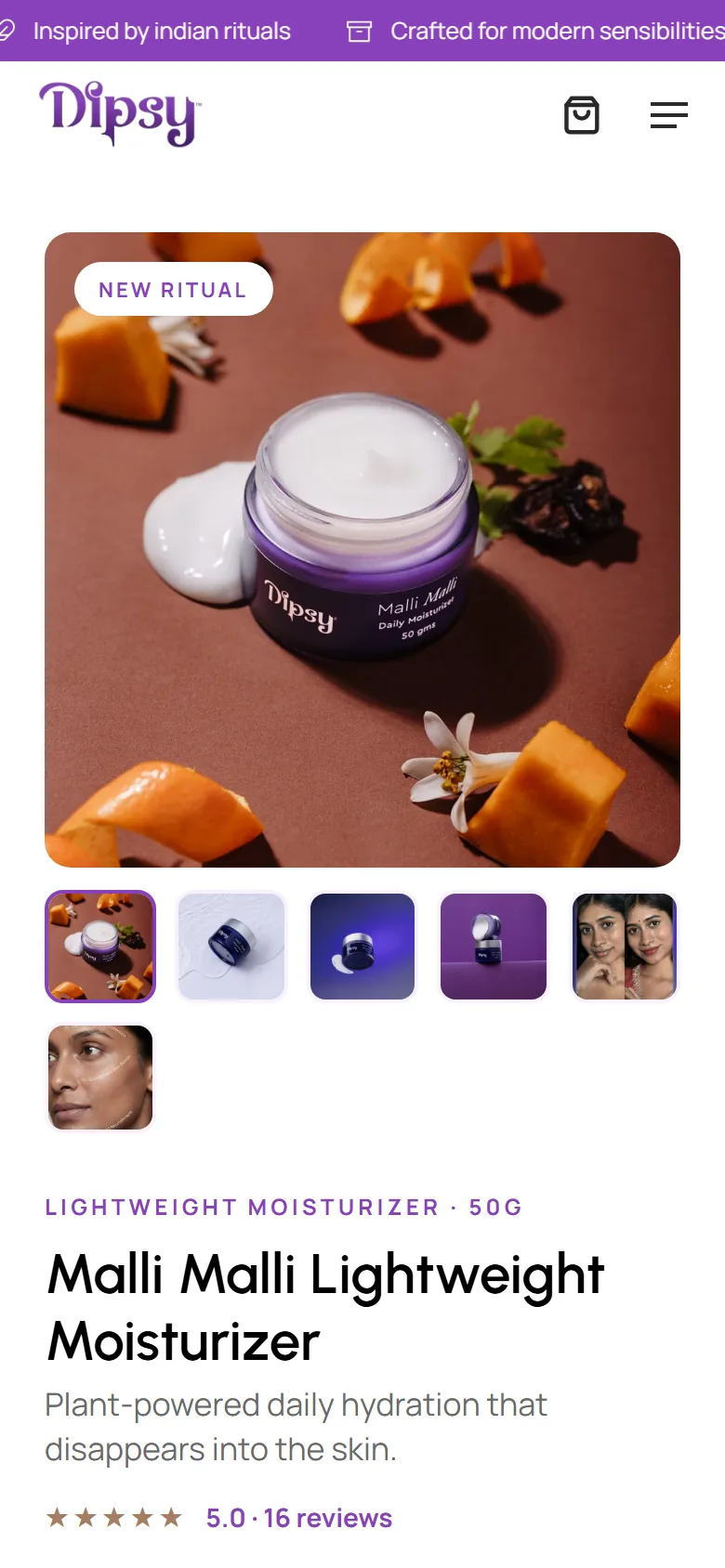
Category, size, name, benefit and the live rating on the first screen.
The buy box does the selling
This is the screen where people decide. It went from a price and a button to the full case for buying.
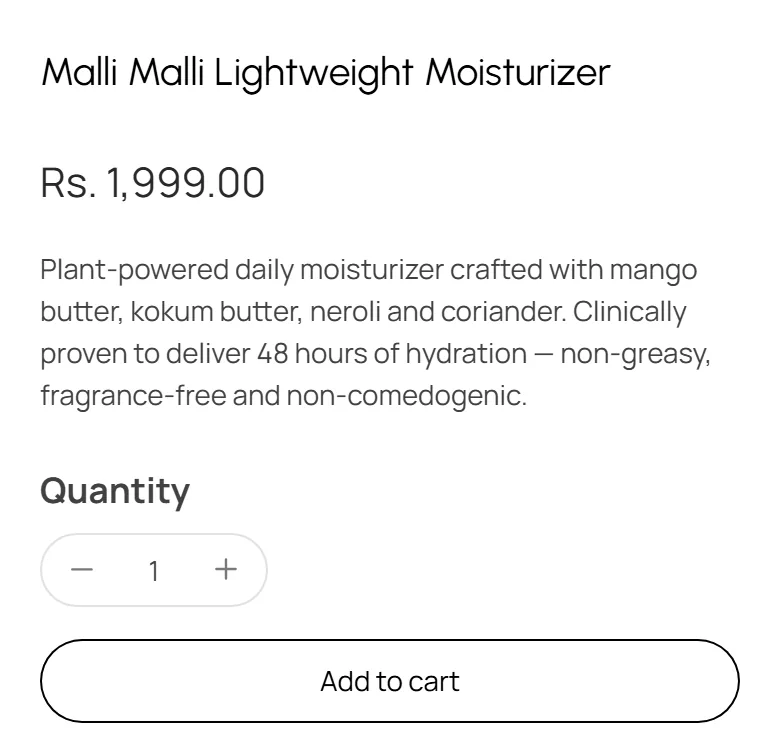
Name, price, quantity and one button.
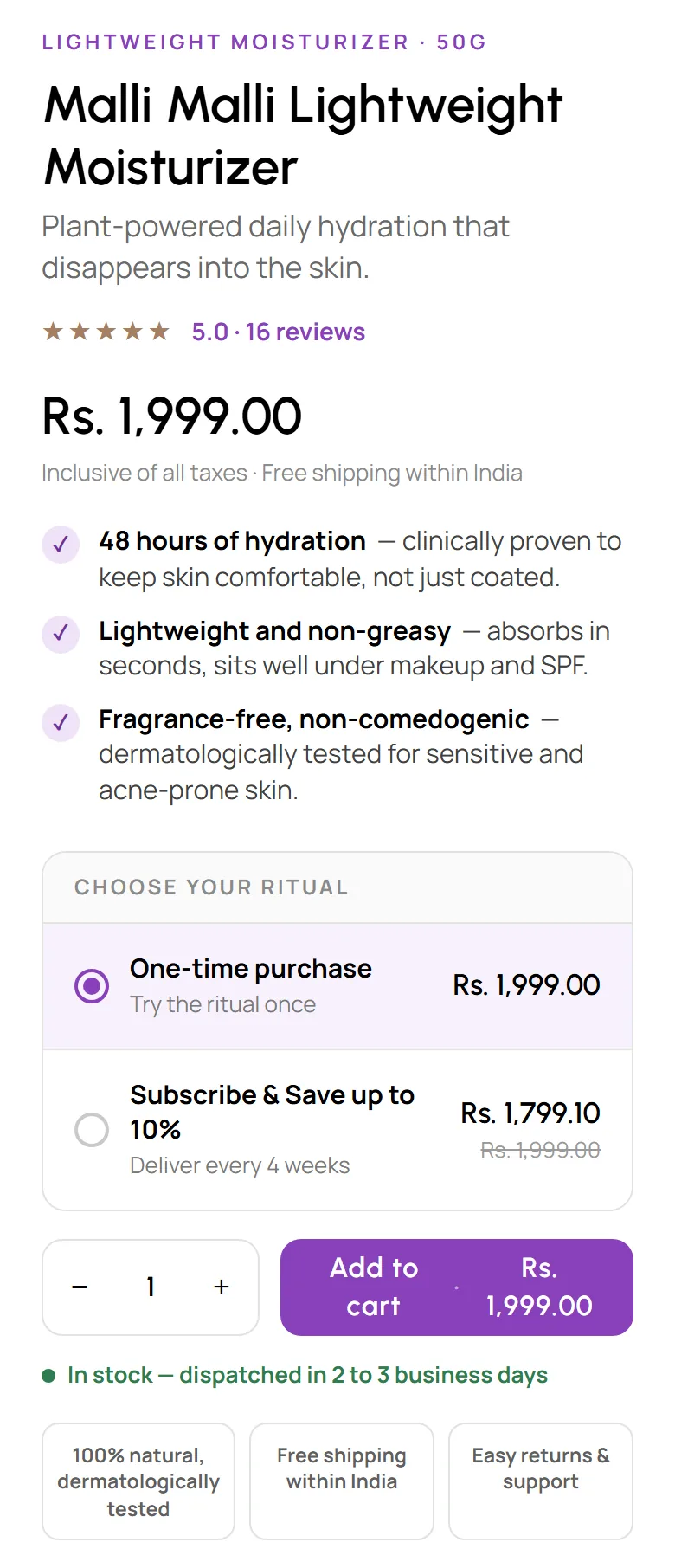
Benefit, rating, three proof points, one-time or subscribe and save, stock and dispatch time, and trust badges.
The bundle has a reason to exist
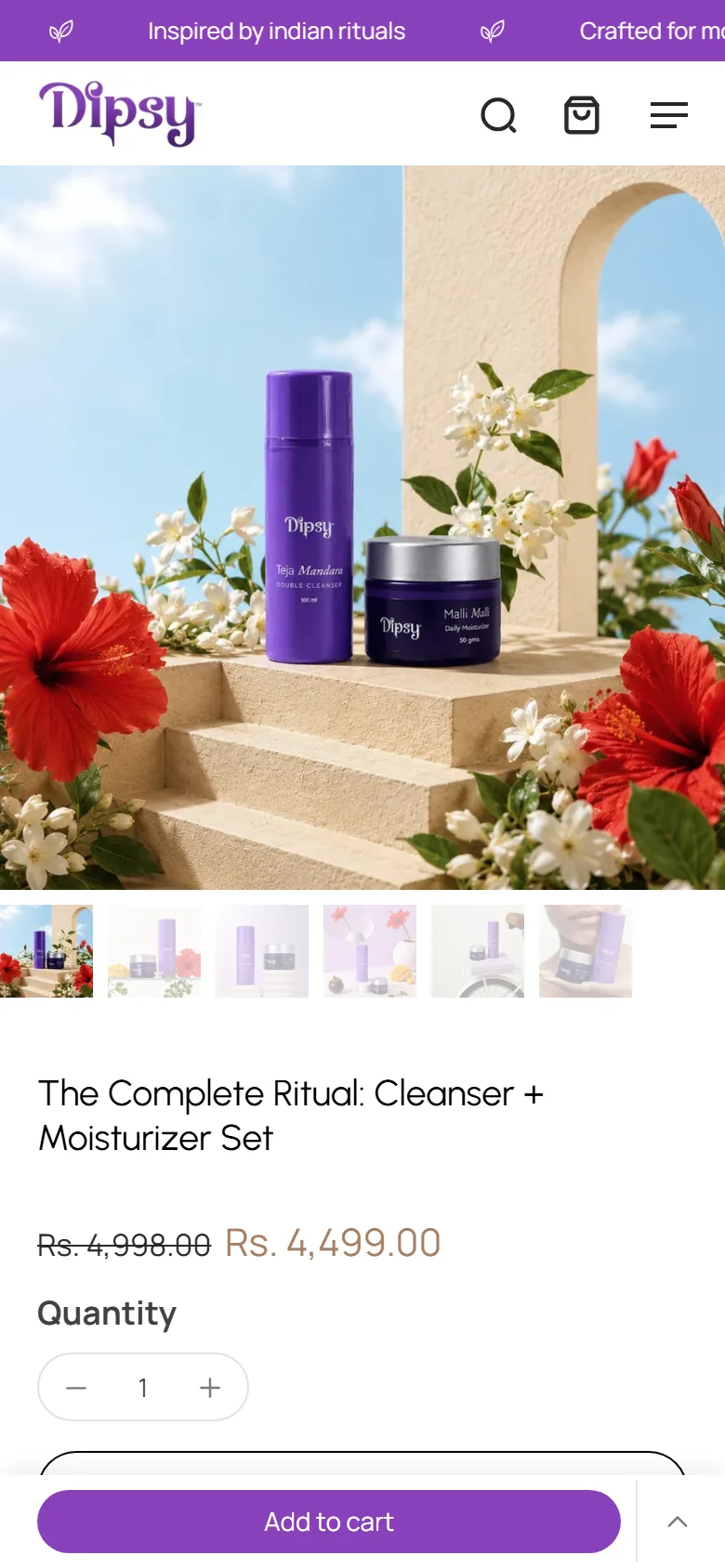
A photo, a name and a struck-through price.
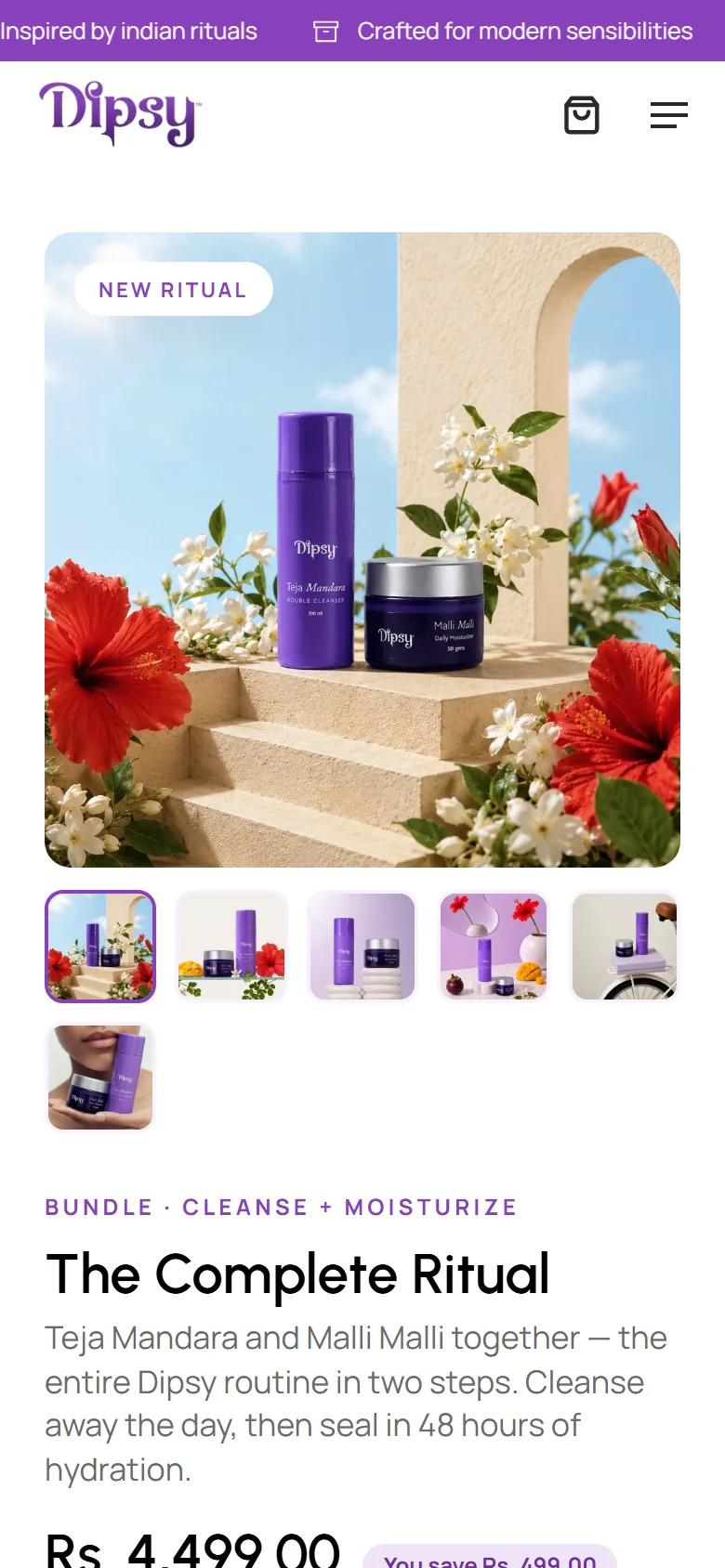
Labelled as the two-step routine, described in plain words, with the saving shown next to the price.
Inside the build
A closer look.
The rebuilt product page on desktop. Everything a shopper needs to decide sits beside the product photo.
Outcomes
What followed.
- A rebuilt Shopify storefront, live since September 2026 and built from the approved Figma designs
- Product pages that answer what it is, why it works and what it costs before the first scroll
- Subscribe and save on both products at 10 percent off, every 4, 6 or 8 weeks
- The Complete Ritual bundle, a cross-sell on every product page and a swap-to-the-set offer in the cart
- Real Judge.me reviews across the store, with every rating matched to the live count
- Google clicks up 24 percent in September, the first month after the relaunch (282 against 227 for 1 to 27 August)
- Both product pages indexed by Google with product, merchant listing and review rich results, and review stars showing in search for the first time
- Every old URL with search traffic carried through the launch, with zero broken internal links
- International shipping to 28 countries with weight-based courier rates
Stack
What we used.
- Shopify
- Liquid
- Shopify Subscriptions
- Shopify Bundles
- Judge.me
- Figma
- Technical SEO
- Google Search Console
Want to be the next case study? Let's talk.
Tell us what you're building. We'll reply within 24 hours with how we'd approach it.