

SCRAPD, a curated marketplace for handmade and upcycled goods
E-commerceUSHandmade and upcycled goods marketplace
300+ websites shipped, clients in 4 countries
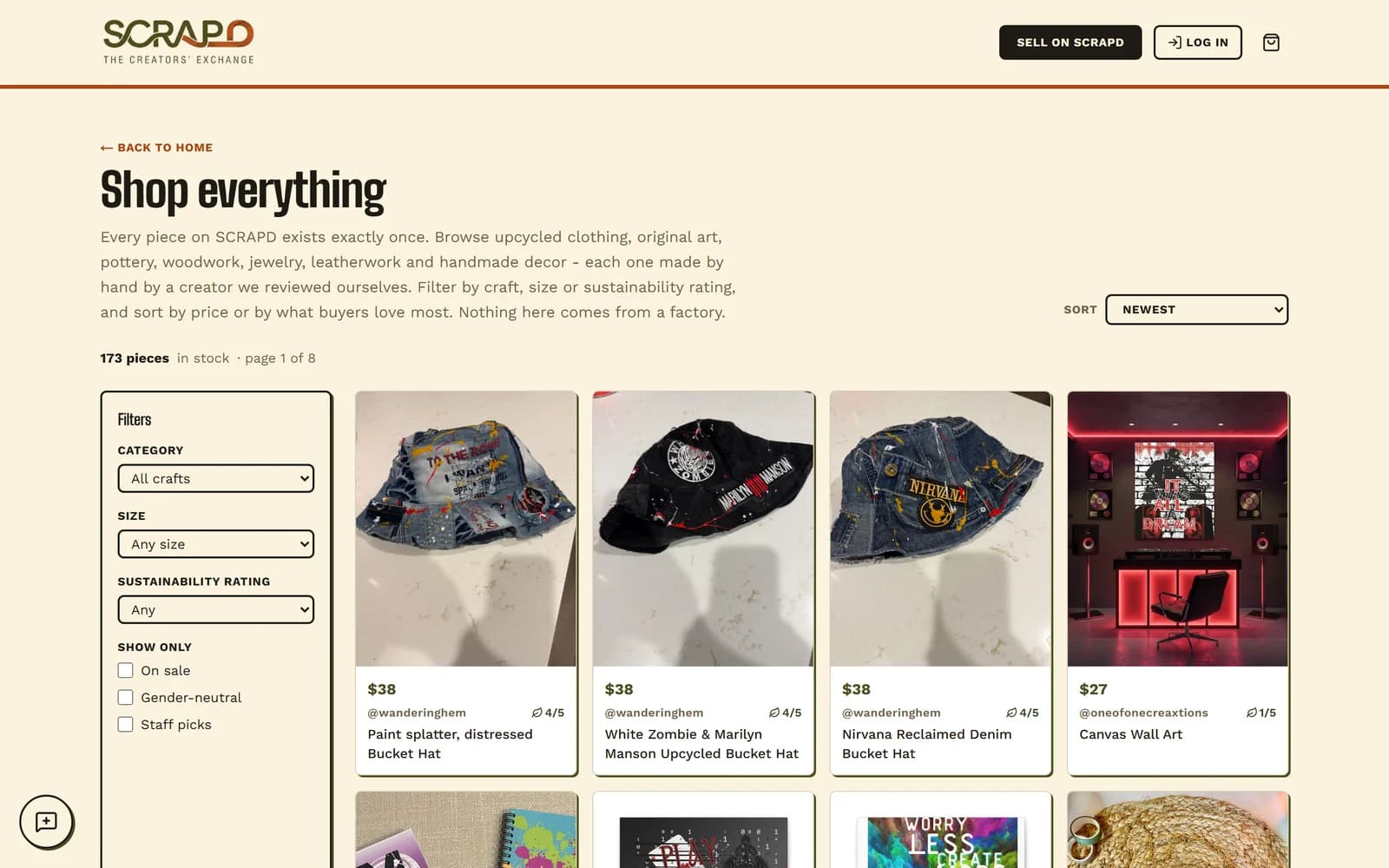
- Multi-vendor marketplace
- Stripe Connect payouts
- Supabase backend
- Sustainability rating system
The challenge
Where we started.
SCRAPD set out to be a deliberate alternative to mass-market e-commerce, a place for upcycled, handmade, and reworked goods where authenticity is the whole point. That meant the platform could not behave like a generic storefront builder. It needed a two-sided marketplace that protects buyers from fast fashion, dropshipping, and factory resale, while giving independent makers a clean path to open a shop, list one-of-one pieces, and get paid directly. The brand also wanted human curation baked into the model, with every storefront reviewed by a real person in Nashville rather than approved by an algorithm, plus a transparent sustainability signal buyers could trust. The build had to carry that ethos through every screen, from category browsing to checkout to creator payouts.
Our approach
What we built.
WitsCode built SCRAPD as a server-rendered web marketplace on Next.js, with Supabase handling data and image storage and Stripe powering secure checkout. The buyer side is organized around browsing by craft, with more than twenty categories spanning upcycled clothing, jewelry, pottery, woodwork, crochet, denim, original art, and more, alongside editorial surfaces like a "Creator of the week" spotlight and a "Just dropped" feed of newest inventory. Each item carries a sustainability rating scored across four verified criteria (materials, waste, packaging, and durability), giving shoppers a consistent way to read the impact behind a piece.
The seller side gives independent makers a clean path to open a storefront and list pieces without listing fees or subscriptions. Storefronts pass through a human review step before going live, and creators receive direct payouts through Stripe Connect once their shop is approved. A Giving Back page surfaces causes and lets visitors support them directly, keeping the platform's ethos visible all the way to the footer.
Inside the build
A closer look.
The marketplace. One-of-one pieces, filterable by craft, size, and sustainability rating.
Outcomes
What followed.
- Buyers can browse one-of-one handmade and upcycled goods across more than twenty craft categories
- Independent makers can open a storefront and list pieces with no listing fees or subscriptions
- Creators receive direct payouts through Stripe Connect after their shop is approved
- Every storefront passes through a human review step before going live, keeping out dropshipped and factory goods
- A four-point sustainability rating gives shoppers a consistent signal on materials, waste, packaging, and durability
- A Giving Back page surfaces causes and lets visitors support them directly without the platform taking a cut
Stack
What we used.
- Next.js
- React
- Supabase
- Stripe Connect
- Resend
- PostHog
- Sentry
Want to be the next case study? Let's talk.
Tell us what you're building. We'll reply within 24 hours with how we'd approach it.