


When to Stay on Shopify Liquid and Skip Headless Entirely
The honest 2026 case for staying native on Shopify. Section Groups, Theme Blocks, Checkout UI Extensions, Metaobjects and the Section Rendering API now cover around ninety percent of what headless...
Headless commerce was sold as the future of Shopify. Agencies pitched Hydrogen and Oxygen as the only path to a fast, brand-specific, CMS-driven storefront. Founders listened, signed six figure contracts, and a year later quietly shipped a slower site with a smaller team to maintain it. That pattern happened often enough that a correction is overdue. In 2026 the native Shopify stack is not the compromise it was in 2021. Section Groups, Theme Blocks, App Blocks, Checkout UI Extensions, Customer Accounts extensions, Metaobjects with Dynamic Sources, and the Section Rendering API together cover roughly ninety percent of what headless originally promised, at about ten percent of the cost. This article makes the positive case for staying on Liquid, itemizes the native replacements point by point, and draws the honest line at the ten percent of builds that still justify going headless.
Why the headless pitch felt so strong in the first place
When Hydrogen launched, the argument was simple. Liquid was server rendered with limited client interactivity. Checkout was locked. The theme editor could not hold structured editorial content. Sections were flat and rigid. Performance hinged on the theme vendor. If a brand wanted a modern React codebase, genuine component composition, an editorial CMS, and full control over checkout, a React based headless build really was the only option. Founders who wanted to feel like a software company, not a Shopify store, were drawn to it. That was a real gap and Hydrogen filled it for a brief window.
The problem is that the pitch outlived the gap. Shopify spent four consecutive Editions shipping the exact features that closed it. Most headless comparison articles still in circulation were written against the Liquid of 2022 and have not been refreshed since, which means buyers are regularly making seven figure architectural decisions on stale information. A 2022 Liquid site and a 2026 Liquid site look like different products. The rendering engine is the same, but the composability, the content model, the checkout surface, the account surface, and the navigation performance are all materially different. Any honest comparison has to start from today's stack, not the one Shopify shipped four years ago.
Editorial CMS without leaving Shopify
The first promise of headless was that merchants could pair Shopify with Sanity, Contentful, or Storyblok and finally have a real content model. Recipes, case studies, ingredients, size guides, authors, press mentions, lookbooks, and landing pages could all be structured content with relationships.
Metaobjects combined with Dynamic Sources deliver this without leaving the admin. A merchant defines a Recipe metaobject with fields for hero image, cook time, ingredients as a reference list, and body copy. Entries are created inside Shopify. The theme editor then lets any section or block pull any of those fields through Dynamic Sources, the small purple database icon next to most inputs. No API keys, no webhook glue, no CORS configuration, no content preview environment to maintain. The merchant edits in the same place they manage products.
For ninety percent of brands this is not just adequate, it is better. The content never falls out of sync with commerce because it lives next to commerce. Translations flow through Shopify Markets. Previews are native. The engineering cost of wiring a third party CMS into a headless frontend simply disappears.
SPA-like speed without a single line of React
The second promise was that a React storefront feels faster than a server rendered one. In practice this has rarely been true for product detail and collection pages, which are the revenue pages. Hydrogen builds routinely ship two to four hundred kilobytes of JavaScript before hydration, which pushes Largest Contentful Paint past the 2.5 second threshold on mid range Android hardware. A lean Liquid theme ships almost nothing and renders the hero image from HTML on the first byte.
The reason headless felt fast in demos was the client side navigation. The fix for that on Liquid already exists. The Section Rendering API lets any JavaScript handler request a re-rendered section by URL and receive HTML back. Cart drawers, collection filters, variant swaps, search suggestions, and load more patterns all run through it. Layered on top, the browser speculation rules API prerenders likely next pages in the background, and the View Transitions API animates between them. The net result is navigation that feels instant without shipping a framework. A well built Liquid storefront in 2026 moves like a single page app while keeping the server rendered first paint that wins Core Web Vitals.
This is a point most headless agencies do not want to hear. On LCP and Interaction to Next Paint, a tuned Liquid theme usually beats a default Hydrogen build. Speed is not a reason to leave Liquid. It is a reason to stay.
Brand-specific UX through nested Theme Blocks
The third promise was component composition. React felt like a real design system. Liquid sections felt like a WordPress page builder. That gap is closed by Theme Blocks. Blocks can now nest inside blocks, which means a product page can be assembled as a tree of composable units rivaling a React component structure, except each unit is a Liquid file that is server rendered and indexable. Merchants drag, drop, and reorder. Developers author the primitives. Designers get component reuse.
Combined with custom sections, App Blocks from installed apps, and Section Groups for entire regions like header and footer, the composability argument against Liquid no longer holds. The theme editor in 2026 is a visual layout tool that rivals Webflow on flexibility while remaining indexable, fast, and merchant friendly.
Checkout control is no longer a headless exclusive
The single biggest historical reason to leave Shopify was checkout. For years, only Plus merchants could touch checkout.liquid, and even they had to rebuild it after the August 2025 deprecation. Checkout UI Extensions changed the game. On every plan, merchants can inject upsells, trust badges, custom fields, delivery instructions, gift messages, conditional banners, and entire new sections into the checkout, Thank You, and Order Status pages. Extensions run in a sandboxed Preact based runtime, which means they cannot break the checkout, cannot leak customer data, and cannot slow the payment flow.
Customer Accounts extensions extend the same model to the post purchase account area. Loyalty dashboards, subscription management, B2B net terms views, reorder flows, and order lookup widgets all ship as extensions rather than as a bespoke React portal. The classic headless pitch of owning the post purchase experience is now a native workflow.
What genuinely still needs headless
The honest case for native has to admit what it does not cover. There is a ten percent where headless is still the right call and pretending otherwise would be dishonest.
The first bucket is non commerce content at massive scale. A publisher with fifty thousand articles where commerce is a secondary surface should not force all of that into Shopify. A Next.js frontend pulling the Storefront API for a small product catalog is a cleaner architecture. The second bucket is checkout flows that reorder or replace steps in ways Checkout Extensibility does not yet permit, such as replacing the payment UI with a fully custom embedded flow. The third bucket is heavy configurator experiences. A bike builder with a million SKU combinations, a custom jewelry CAD tool, or an automotive configurator needs a dedicated frontend with its own rendering pipeline, and Shopify becomes the order and inventory backend. The fourth bucket is stacked storefronts sharing a cart across multiple brands or regions through custom middleware. The fifth bucket is merchants who already shipped a Next.js marketing site and want to keep it while bolting commerce on. For all of these, Hydrogen or a custom Remix build remains the right answer.
If a brand does not fall into one of those buckets, headless is almost always overkill.
The real cost gap
A typical Liquid build out for a fashion or beauty brand runs eight to fourteen weeks and twenty five to eighty thousand dollars. The same scope as a Hydrogen build runs sixteen to twenty eight weeks and ninety to three hundred thousand dollars, plus Oxygen hosting, plus an ongoing React and Remix maintenance retainer. The gap is not only the launch cost. Liquid themes can be maintained by a contractor in a few hours a month using the Shopify CLI, the theme editor, and a small git repo. Hydrogen needs a dedicated frontend engineer or an agency retainer to keep dependencies current, to rebuild against new Storefront API versions, and to keep the deployment pipeline green.
The headless pitch often quietly assumes the brand has or will hire a frontend team. For most merchants under fifty million in revenue, that assumption is the real cost buried in the proposal. It rarely survives contact with a normal hiring market, a normal founder calendar, or a normal roadmap that also wants paid ads, email, retention, and product photography funded at the same time. The money that goes into a Hydrogen rebuild is money that does not go into the channels that actually produce revenue in the same quarter, and the opportunity cost of that trade is almost never modelled honestly in the agency proposal. Staying on Liquid keeps the rebuild budget available for growth, which is usually where the real lift lives anyway.
Stay native, build beautifully
A short honest audit usually settles the question. List the pages that drive ninety percent of revenue. For each, write down the interaction the brand wants and check whether a Theme Block, Metaobject, Section Rendering API call, or Checkout UI Extension can deliver it. If every item ticks, native is enough and the remaining job is craft. That craft is where agencies who push Liquid to its 2026 ceiling earn their fee. If three or more items require a custom runtime, a custom routing layer, or a frontend Shopify cannot host, then headless is on the table and the conversation changes. The audit takes an afternoon and saves months of wasted scoping.
At WitsCode we run this audit with every brand that arrives asking for Hydrogen. About one in ten leaves with a Hydrogen project. The rest leave with a Liquid build that hits the same creative bar for a quarter of the budget, launches in half the time, and stays maintainable by a team that does not have a React specialist. That is not a smaller vision, it is a sharper one. The 2026 Shopify native stack is good enough that the differentiator is no longer which runtime runs the storefront. The differentiator is how carefully the theme is crafted, how fast it loads, how cleanly content flows through metaobjects, how thoughtfully Theme Blocks are nested to give the merchant real composition without breaking the design system, and how well checkout and accounts are extended to match the brand voice at the moments that move revenue. Teams that master the native stack ship beautiful, fast, commerce first storefronts without the tax of a parallel React codebase, and they ship them with a team that can actually keep the lights on afterwards.
There is also an underrated strategic point. Every feature Shopify ships at Editions lands first on the native stack. Shop Pay upgrades, B2B improvements, Markets enhancements, Functions, new checkout surfaces, Customer Accounts extensions, and AI merchandising features all reach Liquid themes and extensions before they reach the Storefront API or before Hydrogen adapters exist. Staying native means staying on the platform roadmap instead of waiting for the headless community to catch up. Headless teams routinely spend weeks every year rebuilding around a platform capability that merchants on Liquid received automatically on release day.
If the next storefront on your roadmap is a straightforward direct to consumer brand, a premium beauty line, a fashion label, a consumables business, a growing niche retailer, or a Plus merchant whose operation lives inside Shopify, the right question is no longer whether to go headless. The right question is who will push Liquid the furthest for the brand before a single line of React is written, and how much of the budget that preserves for the work that actually compounds, which is design, photography, product, performance, and creative that makes the storefront feel unmistakably like the brand.
Building or fixing a Shopify store?
Tell us what you are working with. You get a scoped plan and a straight answer on whether you need a rebuild or just a fix.
- New builds, replatforms, and migrations
- Speed, checkout, and conversion fixes
- Scoped estimate within 48 hours
Want to discuss ecom for your business?
Start a project and we'll talk through where you are, what's working, and the highest-leverage moves for the next 90 days.
Keep reading
More from the Ecom archive.
- Ecom
July 27, 2026
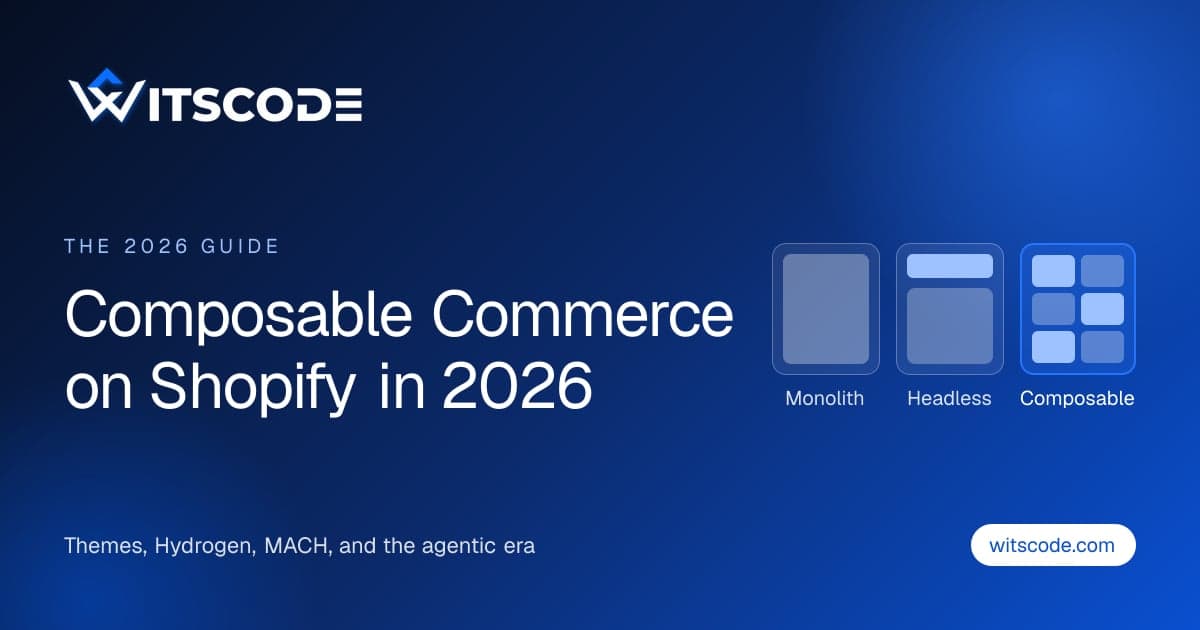
Composable Commerce on Shopify in 2026: Architecture, Real Costs, and the Agentic Shift
What composable commerce really costs on Shopify in 2026, when headless is worth it, and how the new agentic stack changes the answer. With real numbers.
- Ecom
July 19, 2026
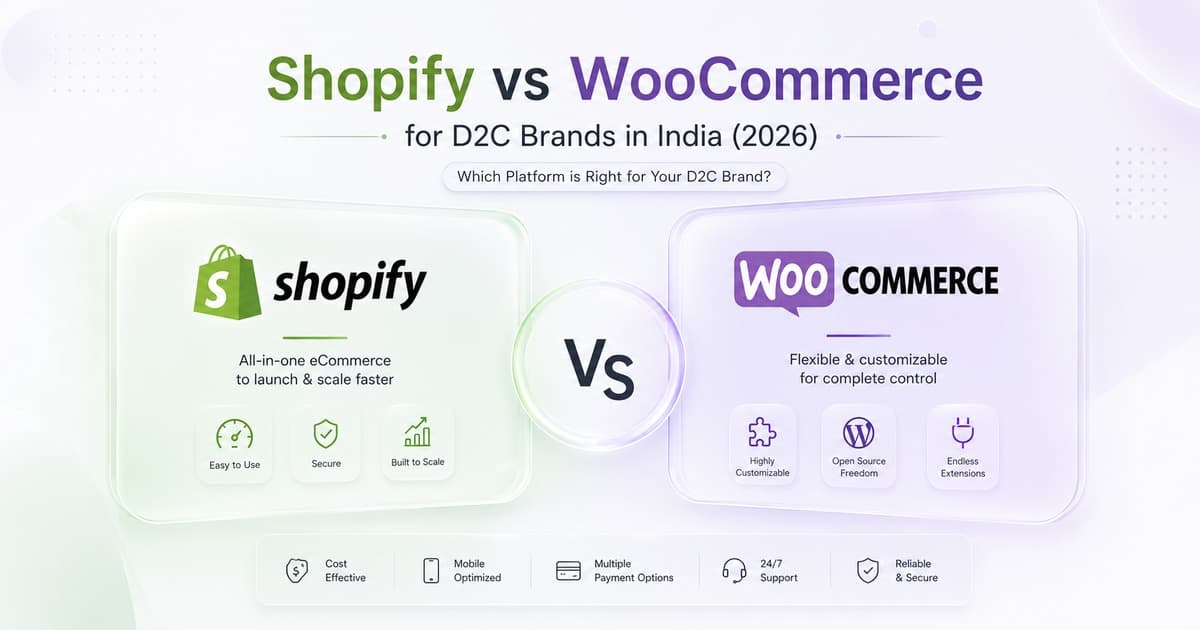
Shopify vs WooCommerce for D2C Brands in India (2026)
Shopify or WooCommerce for your Indian D2C brand in 2026? Real INR costs, the Shopify fee stack, COD, GST, and Shiprocket compared, with an honest verdict.
- Ecom

June 9, 2026
Best Shopify Development Agencies in 2026 (UK and US)
Seven Shopify development companies compared for UK and US brands. Written by one of the seven, and we name where each competitor beats us.