


Guest Checkout vs Account Creation: When Forcing Signup Actually Helps
The default wisdom says always offer guest checkout. That is wrong for three specific merchant types. Here is the honest LTV math that tells you which one you are.
If you have read anything about Shopify checkout optimization in the last decade, you have read the same sentence at least fifty times. Always offer guest checkout. Never force account creation. The Baymard benchmark showing that roughly a quarter of checkout abandoners blame forced signup has been quoted so often it has become a catechism, repeated without the context that made it meaningful.
The sentence is mostly correct. It is also wrong often enough that following it by default is costing a specific group of merchants meaningful money every quarter. The rule was forged in an era when creating an account meant picking a password, confirming an email, remembering both forever, and getting three marketing emails a week as punishment. That world no longer exists on Shopify. New customer accounts replaced passwords with a six-digit email code, and in doing so changed the economics of the decision. What used to be a universally bad idea is now a merchant-specific question with a clear answer.
This article walks through the honest math. It shows the three cases where forcing signup increases lifetime value enough to justify the conversion hit, the cases where guest checkout remains correct, and the middle path most stores should actually be running.
The conversion hit is real and larger than most people admit
Start with the cost side, because it is easier to measure. Baymard's long-running checkout usability benchmark lists forced account creation among the top reasons users abandon at checkout, and when you isolate the effect in controlled split tests across unbranded first-time-buyer traffic, the conversion drop sits somewhere between eighteen and twenty-eight percent depending on the vertical and how painful the signup step is. Call it twenty-three percent as a working estimate. That means if your store currently converts a hundred carts to orders under guest checkout, forcing account creation on cold traffic will convert roughly seventy-seven of those same carts.
This number scales with buyer familiarity. Warm traffic that already knows you loses almost nothing. Cold paid traffic from a Meta ad loses the most, sometimes more than thirty percent because the impulse to buy is fragile. If your growth is cold-traffic-dependent, treat the higher end as your real number.
It is tempting to stop there. Most CRO writeups do. They run the conversion math, note the loss, and recommend guest checkout without asking the second question. The second question is what happens to the seventy-seven buyers who did complete the forced-signup flow, and over what time horizon.
Lifetime value is where the argument actually lives
Lifetime value is the product of average order value, purchase frequency, gross margin, and retention period. For the first-time buyer those numbers are almost entirely about the first order. Beyond that they are dominated by repeat behavior, and repeat behavior is where account ownership changes the physics.
An account holder has saved addresses, saved payment methods, order history, one-click reorder, subscription management without a support ticket, loyalty balances that create psychological lock-in, and an email address that has agreed to be an email address. A guest has an order confirmation and whatever memory they happen to have six weeks later when they need to reorder. Across the Shopify ecosystem the ratio of repeat purchase rates between account holders and guests sits between 1.8x and 2.4x, not because accounts are magic but because friction is real and a saved address is worth more than most founders think.
This ratio only matters if your customers actually repurchase. That is the hinge the entire decision turns on.
The math for a one-time purchase low-repeat store
Imagine a gift store. Average order value sixty-five dollars, fifty percent gross margin, eight percent annual repeat rate because most buyers are shopping for someone else and will not be back until next Christmas. Under guest checkout a hundred visitors who reach your cart generate roughly thirty-two fifty in margin each, plus an eight percent chance of a second order worth another couple of dollars in expected value. Lifetime value settles near thirty-five dollars per converted cart.
Force signup and you lose twenty-three percent of those completed orders. You also double the repeat rate from the retained buyers because accounts do help, but the retained buyers were not going to repurchase much anyway. Your seventy-seven remaining buyers generate about twenty-nine dollars of expected lifetime value each. You have traded thirty-five dollars per visitor for twenty-nine dollars per visitor. The math is decisive and it is negative. Guest checkout wins by a wide margin, and no amount of CRM nurture will close the gap because the buyer fundamentally does not need you again soon.
This is the store the default advice was written for, and for stores like it the default advice is exactly right.
The math for a consumables brand with real repeat behavior
Now imagine a supplements brand. Average order value thirty-five dollars, forty-five percent ninety-day repurchase rate among account holders, twenty-eight percent among guests because a non-trivial share of buyers simply forgets to reorder or forgets which brand they bought and picks something off a shelf instead.
Under guest checkout, expected lifetime value over twelve months comes out to roughly sixty dollars per converted cart once you model average reorder count and margin. Under forced signup the repeat rate jumps, the reorder cadence tightens, and expected lifetime value climbs to around eighty-six dollars per cart. Even after the twenty-three percent conversion haircut the forced-signup path generates about sixty-six dollars per visitor against fifty-one dollars under guest checkout. The account path wins by roughly fifteen dollars every time someone reaches your cart. At ten thousand monthly checkouts that is a hundred and fifty thousand dollars a year left on the table by following the default rule.
For a subscription-first brand the gap is even wider. If thirty-five percent of first-time buyers convert to a subscription when they have an account and only eight percent do when they checkout as a guest, lifetime value under the account path can be three or four times higher than under the guest path. The twenty-three percent first-order haircut is trivial next to a three hundred percent lifetime value delta. Forcing signup is not just defensible. It is malpractice not to.
The three cases where forced signup wins
The pattern across those numbers generalises into three merchant archetypes where forcing account creation is the correct decision.
The first is subscription-first merchants. Subscription boxes, subscribe-and-save consumables where the subscription SKU is priced to be the primary purchase path, coffee brands built around recurring shipments, pet food, meal kits. Roughly ninety percent of the lifetime value in these businesses lives beyond the first order, and the subscription management surface requires an account by definition. A guest subscription is a support ticket waiting to happen, and the economics of trading a small first-order conversion loss for a dramatically higher subscription attach rate are not close.
The second is high-repeat-purchase consumer packaged goods. Supplements, skincare refills, contact lenses, razors, replacement filters, pet consumables, coffee beans for non-subscription buyers. If your ninety-day repurchase rate sits above roughly thirty-five percent and accounts meaningfully lift reorder frequency, the LTV math favors accounts. The key diagnostic is your existing repurchase data. If you do not know your ninety-day repurchase rate, pull it before you make any checkout changes. It is the single most important number in this decision.
The third is business-to-business and wholesale. If you are running a Shopify Plus B2B catalog, company-level pricing, net terms, approval workflows, or any form of account-gated commerce, guest checkout does not even make sense as a concept. Every buyer is already an approved account. This is not a CRO decision. It is an architectural one, and the answer is always forced signup.
The cases where guest checkout still wins every time
Everyone else. One-time-purchase low-repeat verticals like furniture, mattresses, wedding, event tickets, high-ticket electronics, and gift shops should leave guest checkout on and never revisit the decision. Impulse low-average-order-value stores with no real repeat pattern should do the same. Cold-traffic ad-funded stores where the entire growth model depends on first-order conversion cannot afford a twenty-three percent haircut for an LTV upside that does not exist in their data. If your margin depends on the first order, protect the first order.
The test is not what you sell. It is how often your buyers come back. Pull your Shopify reports, segment by first-order cohort, and look at ninety-day and one-eighty-day repurchase rates. If the number is below roughly twenty percent, guest checkout is correct. If it is above forty percent, accounts are worth investigating. Between those numbers you are in the middle zone and the soft-signup pattern below is your answer.
The middle path most stores should actually run
There is a third option that gets almost no attention because it is not a checkout toggle but a configuration pattern. Shopify new customer accounts, the passwordless OTP flow that replaced the old password accounts in 2023, can be configured so that checkout stays guest-friendly while the post-purchase experience aggressively nudges account creation.
Checkout collects an email, which it already collects for order confirmation, so no friction is added. The thank-you page offers a prominent Set up your account button that uses the same email with a six-digit code. No password, no confirmation email dance. The post-purchase email sequence reinforces account benefits like order tracking, reorder, loyalty, and subscription management. Well-executed, this pattern converts forty to sixty percent of buyers into account holders on the thank-you page alone, and another ten to fifteen percent via email. You end up with account holders for well over half of paying customers with zero first-order conversion penalty.
This is the correct answer for the large middle of Shopify merchants. Most stores defaulting to guest checkout should be running this pattern instead of leaving post-purchase account creation as an afterthought buried on the order status page.
The Shopify-specific detail that changes the decision
One nuance matters when you make this call, and it is specifically a Shopify thing. If you are still running the legacy customer accounts, the password-based kind, the conversion hit from forcing signup is closer to the high end of the Baymard range because picking a password is genuinely friction. If you have migrated to new customer accounts, the OTP flow, the hit is closer to the low end because entering a six-digit code you just received is about as painless as account creation gets. The decision thresholds shift accordingly. A borderline case under legacy accounts that would not survive the conversion drop can become a clear win under the OTP flow.
Check which version you are running before you model anything. Settings, Customer accounts, and confirm you are on the new version. If you are still on classic accounts and you have any meaningful repeat-purchase behavior, migrating is strictly better before you even touch the checkout toggle.
Running the decision on your own store
The decision reduces to four numbers you can pull from Shopify admin and your analytics. Your ninety-day repurchase rate from the customer cohort report. Your average order value and gross margin. Your estimated first-order conversion rate under guest checkout from your current funnel. Your estimated lift in repeat rate from account ownership, which you can approximate by comparing repurchase rates between existing account holders and existing guests in your historical data.
Plug those into the same structure the examples above use. Compute expected lifetime value per converted cart under guest checkout. Compute it under forced signup, applying a twenty to twenty-five percent conversion haircut depending on whether your traffic is warm or cold, and a 1.8 to 2.4 times lift on repurchase for retained buyers. Compare. If forced signup produces higher expected lifetime value per visitor, force signup. If not, run guest checkout with an aggressive post-purchase account creation nudge and move on to the next optimization.
Do not run the decision on vibes, on what your Slack friends did, or on the latest thread about guest checkout being sacred. The math is specific to your repurchase economics and the answer is not universal.
Where WitsCode fits
Most of the Shopify stores we audit are running the wrong checkout configuration for their economics. The consumables brands are defaulting to guest checkout and leaving lifetime value on the table. The one-time-purchase gift stores are forcing accounts because a consultant told them to and losing first-order conversion that will never be recovered. The B2B merchants are running consumer-style checkouts that do not gate pricing or terms properly. In every case the fix is not a toggle. It is a model that ties checkout configuration to repurchase economics and runs the expected-value math honestly.
WitsCode's checkout and LTV audit does that modelling for you. We pull your ninety-day and one-eighty-day repurchase cohorts from Shopify, segment account holders versus guests in your existing data, model lifetime value under each checkout configuration, estimate the conversion sensitivity of your specific traffic mix, and output a dollar-weighted recommendation with the migration path to get there. If the answer is guest checkout, we also audit your post-purchase account creation flow because that is usually where the real money is hiding. If the answer is forced signup, we verify you are on new customer accounts with the OTP flow rather than the legacy password version that would make the forced-signup math substantially worse.
We have run this audit across enough of the 300-plus sites we have shipped to know that roughly a third of merchants are on the wrong configuration for their economics, and the average annualised impact of moving them sits in the mid-five-figures for a store doing a few million in revenue. It is one of the highest-leverage single decisions in a Shopify checkout, and it is almost always being made on autopilot.
If you want the honest math run on your store rather than a generic recommendation from a blog post, that is the audit. Bring your Shopify admin access and your last ninety days of orders, and we will tell you within a week whether you are leaving money on the table and exactly how much.
Building or fixing a Shopify store?
Tell us what you are working with. You get a scoped plan and a straight answer on whether you need a rebuild or just a fix.
- New builds, replatforms, and migrations
- Speed, checkout, and conversion fixes
- Scoped estimate within 48 hours
Want to discuss ecom for your business?
Start a project and we'll talk through where you are, what's working, and the highest-leverage moves for the next 90 days.
Keep reading
More from the Ecom archive.
- Ecom
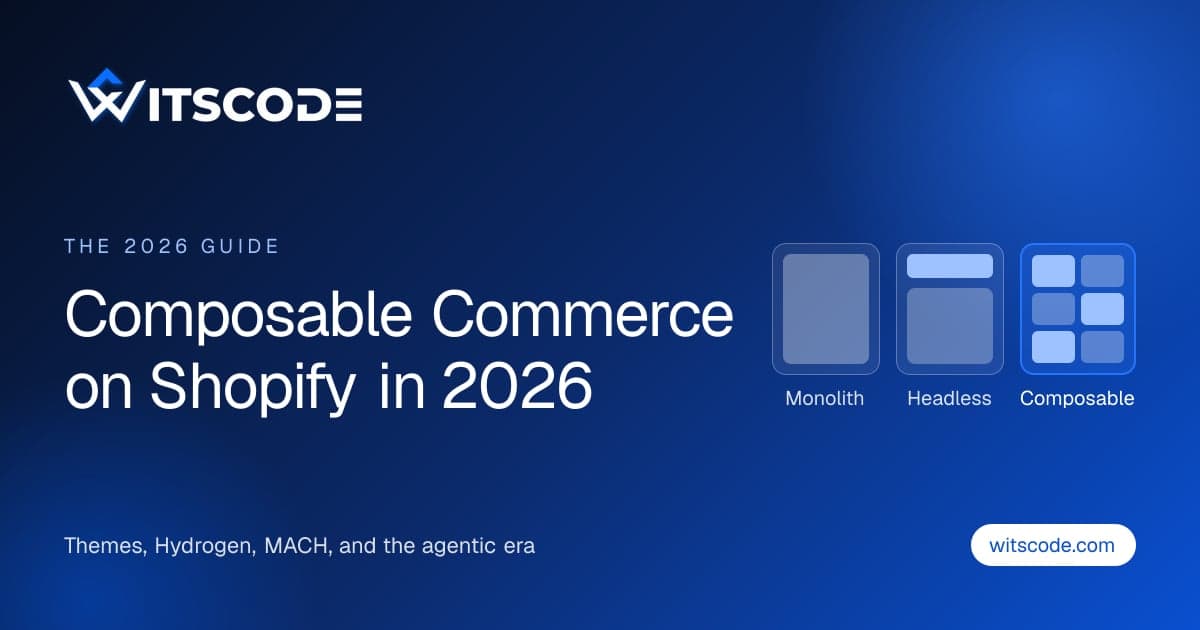
July 27, 2026
Composable Commerce on Shopify in 2026: Architecture, Real Costs, and the Agentic Shift
What composable commerce really costs on Shopify in 2026, when headless is worth it, and how the new agentic stack changes the answer. With real numbers.
- Ecom
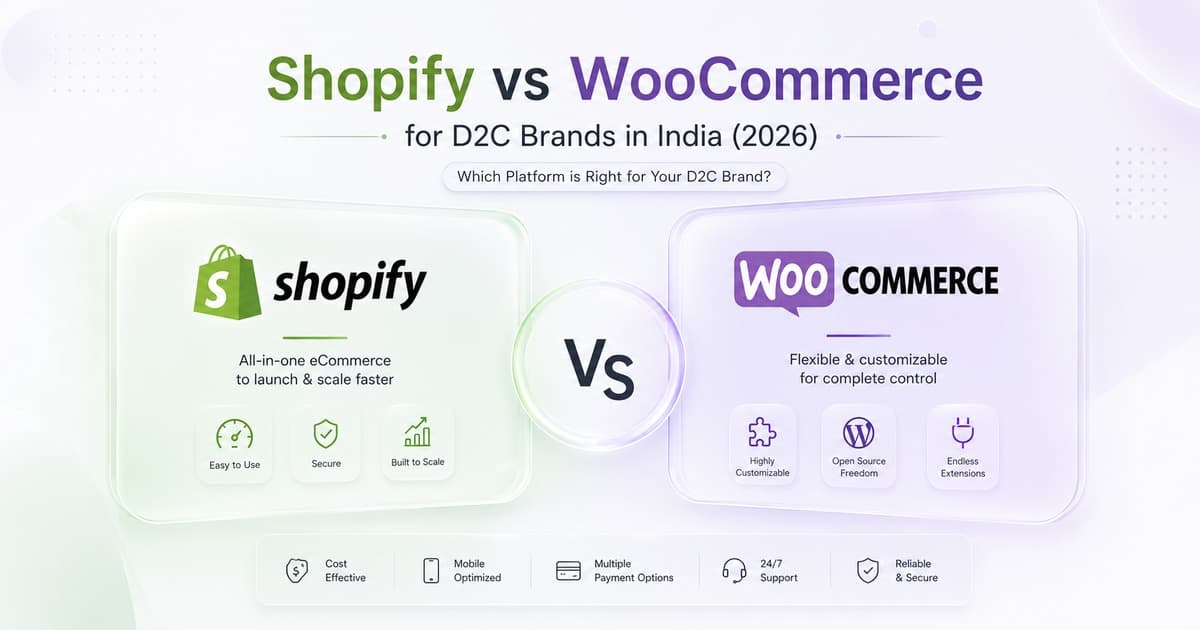
July 19, 2026
Shopify vs WooCommerce for D2C Brands in India (2026)
Shopify or WooCommerce for your Indian D2C brand in 2026? Real INR costs, the Shopify fee stack, COD, GST, and Shiprocket compared, with an honest verdict.
- Ecom

June 9, 2026
Best Shopify Development Agencies in 2026 (UK and US)
Seven Shopify development companies compared for UK and US brands. Written by one of the seven, and we name where each competitor beats us.