


Native Shopify Features Replacing Third-Party Apps in 2026
A veteran walkthrough of Shopify Bundles, Subscriptions, Gift Cards, Metafields, Markets, Forms, and Customer Accounts. Where native is now enough, where the paid app still wins, and how to migrate...
A Shopify store from 2021 needed a paid app for almost every meaningful merchandising pattern. A bundle app, a subscription app, a custom fields app, a popup app, a translation app, an international checkout app, and very likely a customer portal app. Each one charged between twenty and five hundred dollars a month, each one injected scripts into the storefront, and each one owned a slice of customer data that did not sit cleanly inside Shopify.
The 2026 store looks different because Shopify spent the last three years quietly shipping first-party replacements for most of those apps. Almost all of them perform better on the storefront than the app they replace, because they do not need a third-party script tag to do their job. The question every operator should be asking is not whether native has caught up in general, but exactly which of their current app invoices are now buying something Shopify already includes.
This guide walks through the feature areas where the gap has closed or almost closed, names the dominant paid app in each, describes the specific remaining gap, and marks the moment the native version is already enough.
Shopify Bundles Has Replaced Most of Bundler, Fast Bundle and Bundle Builder
Shopify Bundles is the free native app that Shopify launched in late 2023 and has steadily expanded since. It covers two patterns that account for the majority of bundle revenue on the platform. The first is fixed bundles, which are a curated set of specific products sold as a single unit. The second is multipacks, which are multiple units of the same variant. Both patterns now work end to end with Shop Pay, inventory sync back to component SKUs, and a clean presentation in the cart as a single line item with visible components. Discount support arrived in 2024 and now includes percentage off the bundle price relative to the sum of components.
The feature gap that still sends operators to a paid app is mix and match with quantity rules. A customer choosing any three shirts from a collection or a build your own six pack is not something native Bundles handles cleanly without writing a Shopify Function. Tiered volume discounts of the buy two save ten percent, buy three save twenty percent variety are also not in the native UI. The other gap is a fixed bundle price lower than the sum of components in a non proportional way, for example a gift set sold at a round number regardless of contents. Shopify Bundles expresses that as a percentage discount against component prices, which is close enough for most merchants but not all.
Native Bundles is enough when a store sells pre composed kits, multipacks, or percentage off promotions. It becomes the wrong tool when the bundle is the configurator itself and the store is effectively a build a box business. In that case the paid app survives, but the monthly spend is now clearly attributable to one specific pattern rather than the general idea of bundling.
Shopify Subscriptions Has Narrowed the Case for Recharge
Shopify Subscriptions is the native app that replaced the old Subscriptions API work that Shopify shipped in 2022 and 2023. By 2026 it handles pay as you go, prepaid, flexible delivery frequencies, first order and recurring discounts, skip and pause, variant swapping inside the customer account, subscription specific upsells, and Shop Pay subscription checkout. Customer self management inside the new customer accounts means merchants no longer need to embed a Recharge customer portal iframe into a theme page. Reporting lives in Shopify admin, which means subscription GMV, churn, and cohort retention sit next to the rest of the store analytics instead of inside a separate dashboard.
The specific gap that keeps Recharge, Loop and Appstle in business is build a box subscriptions. Native cannot yet let a subscriber pick six products from a curated set for each delivery, rotate the contents, or run a curated club model where the merchant chooses what goes in the next box. Membership subscriptions that gate access to content or discounts rather than ship a product are also not a native pattern. Advanced dunning with custom retry schedules, SMS outreach on failed charges, and granular cohort analytics at the level a finance team wants at eight figure subscription GMV are still reasons to keep a specialist tool.
For classic replenishment, which is coffee, vitamins, pet food, refills, and anything else that ships on a predictable cadence in a fixed SKU, native subscriptions is the right answer in 2026. The migration is made easier by the fact that Shopify offers a migration path from Recharge for stores on Shopify Payments that preserves subscriber tokens and billing dates. The economic argument is sharp. Recharge and similar apps charge a percentage of subscription GMV on top of a platform fee. At two million dollars of subscription revenue that percentage alone is a five figure line item, and a focused migration typically pays back inside a quarter.
Gift Cards and Store Credit Have Absorbed Most of Rise.ai
Gift cards have been in Shopify for a long time, but the 2024 launch of the Store Credit API, which went generally available for direct to consumer in 2025, changed the calculation for Rise.ai and Govalo class apps. Native gift cards now support digital delivery, scheduled send dates, recipient personalization, custom denominations, POS integration, and bulk issuance. The new Store Credit API lets merchants issue store credit as a separate first class balance, which used to be the main reason to pay Rise.ai. Refunds as store credit, loyalty point redemption into balance, and apology credit for a service failure are all native workflows now.
What stays outside native is the gift card upsell pattern where a customer pays a hundred dollars and receives a hundred and twenty dollar card, usually run as a seasonal campaign. That promotion still requires either a Shopify Function or a paid app, and paid apps ship it as a one click setup. Tight loyalty integration, where points convert to gift cards automatically and the customer sees a unified wallet, is also still app territory. For the baseline program of selling gift cards, giving store credit for returns, and handling the occasional corporate gifting request, native is already enough and the monthly app subscription is the clearest candidate for removal this quarter.
Metafields and Metaobjects Have Eaten the Entire Custom Fields Category
The single largest category of app spend that has been quietly replaced is custom fields. Accentuate, Metafields Guru, and every app whose job was to add a text field or a file picker to a product or a page is now fighting Shopify's native data layer, and it is losing. Metafields support every type an ecom store cares about, from rich text to money values to file references to product references. Metaobjects let a merchant define entirely new content types, for example a team member, an FAQ, a recipe, a spec sheet, or a testimonial, and populate records that the theme can render through Liquid or the Storefront API can expose to a headless frontend.
By 2025 Shopify added metaobject references into every relevant theme editor block setting, which means a merchandiser can now attach a recipe record to a product, a spec sheet to a category page, or a testimonial carousel to a homepage without a developer. Admin blocks let apps and Functions contribute custom UI directly into the product detail page in admin, which was the other thing Accentuate used to do. Bulk editing, CSV import export, and validation by type are all in the UI.
What native does not do is editorial workflow, approval chains, or revision history in a way that a magazine publisher might want. Very few ecom stores need those, and the ones that do usually have a headless CMS already. For the ninety percent case, which is structured product attributes, landing page content blocks, spec tables, and reusable content records, metafields and metaobjects are the right answer. The paid custom fields app is dead weight by 2026, and the migration is a matter of exporting JSON, remapping definitions, and updating Liquid references from the app namespace to the native shop.metafields namespace.
Shopify Markets Has Replaced the Low End of Global-e and Zonos
International selling used to mean choosing between Global-e, Zonos, or building a separate store per region. Shopify Markets collapsed most of that into a native framework. A merchant can now run multiple currencies, local subdomains or subfolders per country, per market pricing and catalog, per market payment methods, geolocation redirect, and duty and import tax calculation from the same Shopify admin. Translate and Adapt, the free Shopify app, handles localization of storefront copy, product descriptions, and theme content through a mix of machine translation and human review.
Markets Pro extends the native framework into a merchant of record model, where Shopify becomes the seller of record for cross border transactions, handles compliance, manages fraud, and delivers localized checkout in over a hundred and fifty countries. The pricing is a percentage of international GMV, which is where the economic calculation gets interesting. For stores under roughly five million dollars of international revenue, Markets Pro is typically cheaper than a Global-e contract and dramatically cheaper than standing up regional entities. Above that threshold, a negotiated enterprise deal with Global-e or a custom cross border setup usually wins on percentage terms, and the remaining reason to stay on Global-e is the per SKU marketing copy variants across brand and market dimensions that Shopify still models as one translation per market.
The machine translation quality of Translate and Adapt is the other honest gap. It is fine for transactional copy, size guides, and category descriptions. It is weak for brand voice on a homepage hero or a campaign page. A store that takes localization seriously will still have a human review pass on top, but the tool to hand the translator and the workflow to deploy the result are both native and free.
Shopify Forms Has Replaced Privy and Most Popup Apps
Shopify Forms launched in 2023 and by 2026 covers newsletter signups, lead capture, wholesale applications, and account request flows. It supports popup, embedded, and flyout display modes, targeting by page URL or device type, scheduled campaigns, and discount on signup. Because it writes directly into Shopify customer records and fires events into Shopify Flow, it integrates cleanly with Shopify Email and with third party email tools through their native connectors. The storefront impact is meaningful. Native forms do not inject a third party script into every page, which means the Interaction to Next Paint cost that Privy and similar apps impose on a theme is gone.
The gap that keeps paid popup apps on the roster is conditional logic. If a form needs to show a different next field based on a previous answer, branch into different sub forms for wholesale versus retail versus press inquiries, or run a multi step product configurator, native Forms does not handle it. File uploads at scale, complex validation rules, and direct webhooks to non Shopify endpoints without going through Flow are also gaps. For the specific case of an email capture popup with a ten percent off code, native is the right answer and the monthly Privy subscription is immediately cuttable.
New Customer Accounts Have Replaced Flits and Customer Fields
New Customer Accounts went generally available in 2024 and became the default in 2025. Passwordless login over email OTP, order history, self serve returns, subscription management when Shopify Subscriptions is installed, order tracking integrated with Shop, and B2B company access are all native. Account extensions let apps contribute blocks into the customer account area, which means a loyalty app or a wishlist app can live inside native accounts rather than forcing the merchant to link out to a separate portal.
The portion that remains app territory is heavy custom portals. A B2B customer that needs a reorder sheet with multi step approval, a wholesale rep that needs to place orders on behalf of accounts, or a loyalty program with gamified tier displays and custom animations will still ride a specialist app. For a direct to consumer store whose customer area needs to show orders, returns, subscriptions, and a wishlist, native is enough. The classic Shopify accounts area that many themes still default to is the thing to migrate away from, not toward a paid portal app.
The Real Cost of an App Is Not the Monthly Fee
The reason to audit the app stack is the compounding cost that sits outside the invoice. Every paid app installs script tags into the theme, which adds bytes on the critical path and work to the main thread. On a store with six or seven apps loaded on every product page, the Interaction to Next Paint impact is measurable and it is a conversion tax. Every paid app also scatters customer data. A subscriber in Recharge, a reward balance in Smile, a profile field in Accentuate, and a language preference in Langify are four systems that need to stay in sync and almost never do.
The migration cost is the third hidden charge. Every month a store stays on a paid app that native has replaced, the data set inside that app grows, the theme references to its Liquid helpers deepen, and the switching cost rises. The right time to migrate is the month after native ships the eighty percent of functionality that the store actually uses, not the month after it ships one hundred percent. Waiting for one hundred percent is how merchants end up paying a percentage of GMV to a subscription app for five years because the migration window never felt urgent.
One note of honesty. Shopify sunset its native product reviews app in 2022 and pointed merchants at Judge.me. Reviews are the one area where native regressed, and a paid app remains the right answer. The rest of the categories above are going the other way.
How WitsCode Runs a Native Shopify Migration
WitsCode has spent the last three years migrating Shopify stores off paid apps and onto native features. The engagement is a fixed scope that starts with a full app audit against the current native feature set, produces a total cost of ownership comparison for the next twelve months, and sequences the migrations in the order that recovers the most margin first. Typical order is Subscriptions, then Custom Fields, then Forms, then Bundles, then Markets, with Gift Cards and Customer Accounts folded into whichever sprint has headroom.
Each sprint includes the data export and remapping, the theme refactor to remove app script tags and Liquid helpers, a verification pass on Core Web Vitals before and after, and a documented rollback path for the first week. Subscription migrations ride the official Shopify migration tool for Recharge. Forms and Bundles are manual rebuild sprints because the data sets are small enough that it is faster than writing a migrator.
The typical outcome for a mid market store is a reduction in monthly app spend between six hundred and three thousand dollars, a measurable Interaction to Next Paint improvement from removing app scripts on the critical path, and a single source of truth for customer, subscription, and product data inside Shopify admin. Stores that want the migration executed inside a quarter without breaking production can book the engagement directly.
The native Shopify platform in 2026 includes most of what merchants used to pay for. The work now is not deciding whether native is capable. It is deciding which app invoice to cut this month, and executing the migration carefully enough that the customers never notice it happened.
Building or fixing a Shopify store?
Tell us what you are working with. You get a scoped plan and a straight answer on whether you need a rebuild or just a fix.
- New builds, replatforms, and migrations
- Speed, checkout, and conversion fixes
- Scoped estimate within 48 hours
Want to discuss ecom for your business?
Start a project and we'll talk through where you are, what's working, and the highest-leverage moves for the next 90 days.
Keep reading
More from the Ecom archive.
- Ecom
July 27, 2026
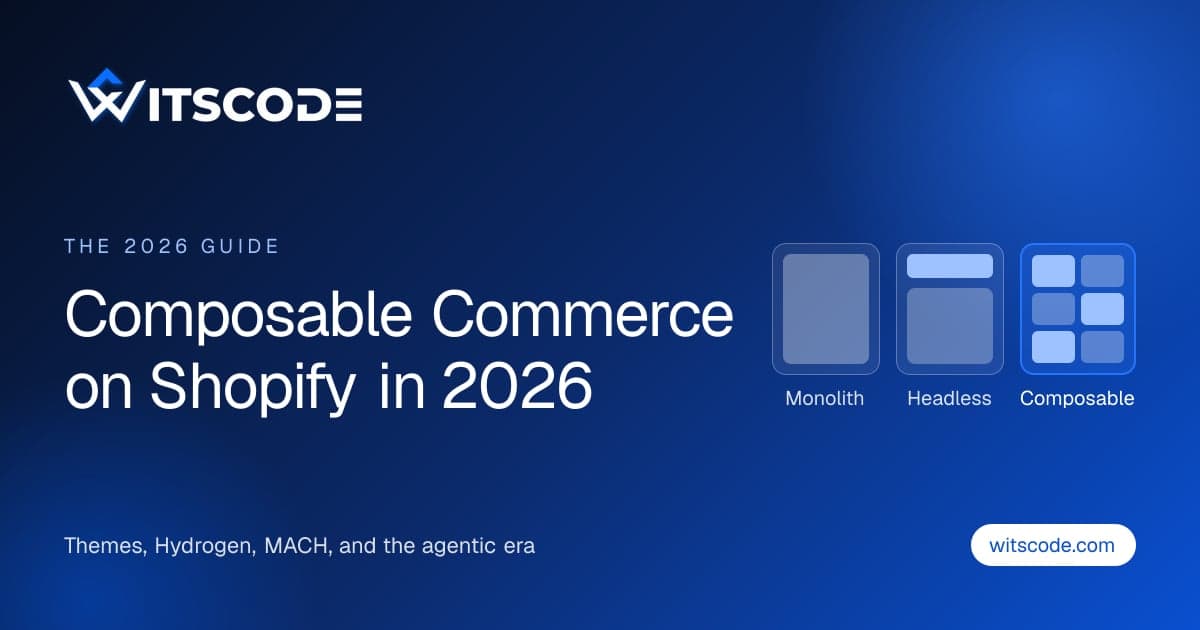
Composable Commerce on Shopify in 2026: Architecture, Real Costs, and the Agentic Shift
What composable commerce really costs on Shopify in 2026, when headless is worth it, and how the new agentic stack changes the answer. With real numbers.
- Ecom
July 19, 2026
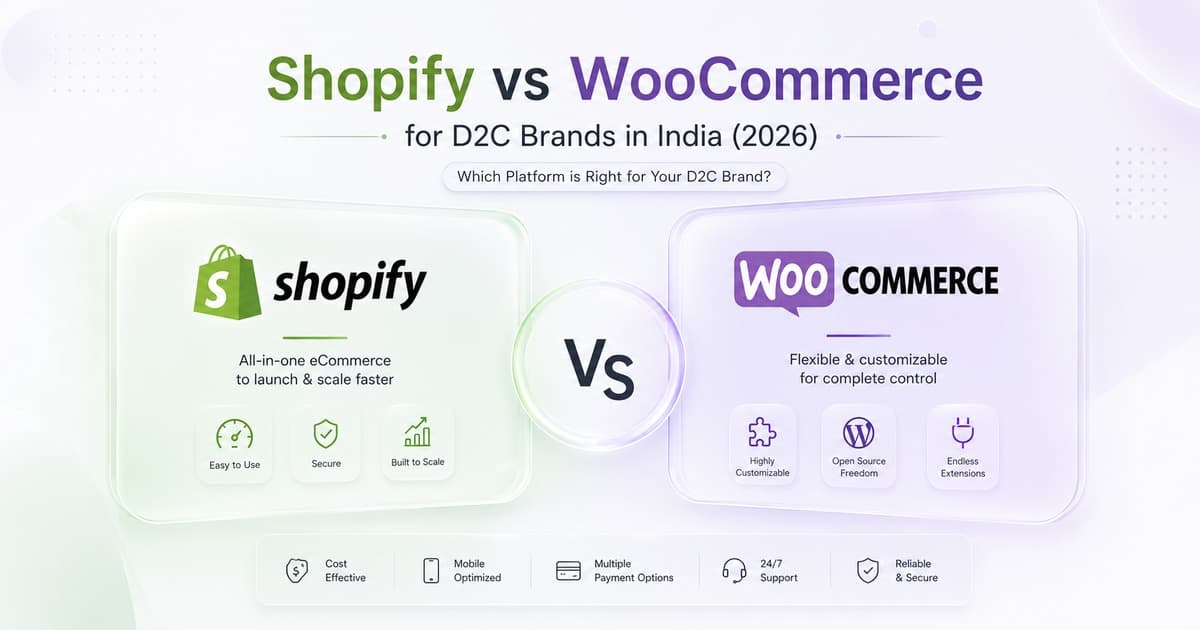
Shopify vs WooCommerce for D2C Brands in India (2026)
Shopify or WooCommerce for your Indian D2C brand in 2026? Real INR costs, the Shopify fee stack, COD, GST, and Shiprocket compared, with an honest verdict.
- Ecom

June 9, 2026
Best Shopify Development Agencies in 2026 (UK and US)
Seven Shopify development companies compared for UK and US brands. Written by one of the seven, and we name where each competitor beats us.