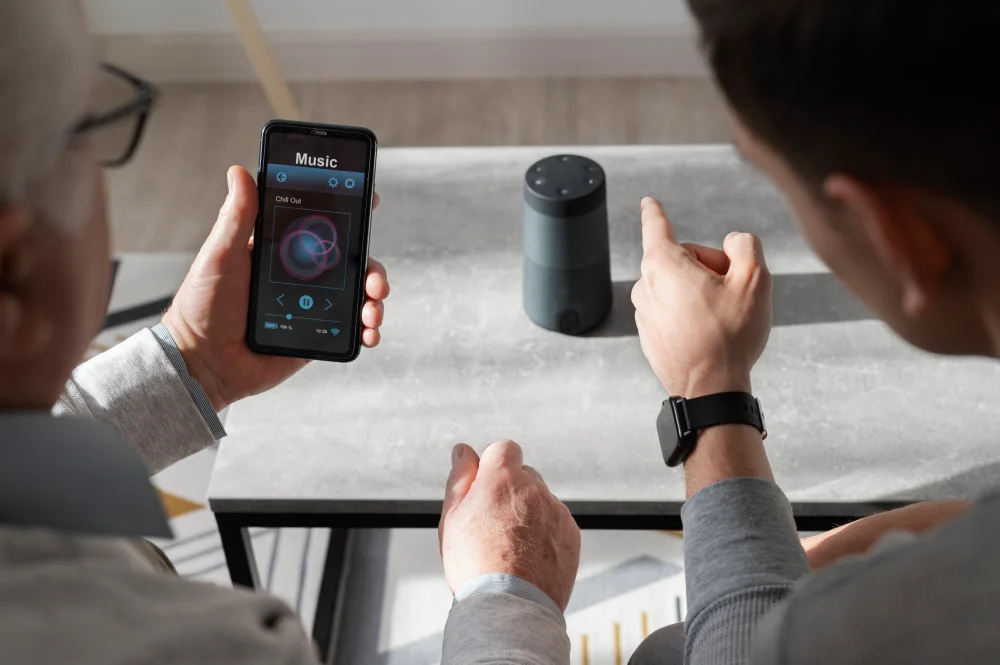
I asked Siri, Alexa, and ChatGPT the same question last Tuesday: “Where can I buy sustainable running shoes under a hundred dollars?” Each one gave me a completely different answer. Siri pulled up a map with three local stores. Alexa recommended an Amazon bestseller. ChatGPT gave me a ranked list of five brands with pros and cons for each.
Three assistants. Three totally different results. And if your e-commerce brand wasn’t optimized for any of them, you just missed three separate chances to make a sale.
That gap between what people ask and what voice assistants answer is where voice search AI optimization lives. It is no longer a nice-to-have experiment. It is the front door to your store for a huge chunk of shoppers who never touch a keyboard. This guide breaks down exactly how to get your D2C brand into those voice answers across every major platform, with specific tactics you can start using this week.
How Voice Search Behavior Has Actually Changed
Forget the stat projections from 2020 that predicted half of all searches would be voice by now. The reality is more nuanced and, honestly, more interesting.
People do not use voice search the way marketers assumed they would. Nobody is standing in their kitchen saying “best moisturizer for combination skin dermatologist recommended.” That is a typed query dressed up in voice clothing. Real voice queries sound like conversations with another person.
What Real Voice Queries Sound Like
Here is what I hear myself saying to voice assistants on a daily basis:
- “Hey Siri, is that coffee shop on Fifth Street still open right now?”
- “Alexa, order more of that oat milk I got last month.”
- “Hey Google, what’s a good birthday gift for a ten-year-old who likes science?”
- “ChatGPT, compare the Allbirds Tree Runners to the Nike Pegasus for everyday walking.”
Notice the pattern. These are full sentences. They include context (time, location, personal history). They assume the assistant already knows something about the speaker. And they expect a single, definitive answer rather than a list of ten blue links.
For voice SEO 2026, this behavioral shift is the starting point for every optimization decision you make.
The Three Moments People Reach for Voice
Not every search happens by voice. People tend to speak their queries in three specific situations:
- Hands-busy moments — cooking, driving, exercising, carrying groceries. They physically cannot type.
- Quick-answer needs — store hours, weather, unit conversions, price checks. They want a fact, not a research session.
- Complex comparison requests — especially with ChatGPT voice mode, people now ask multi-layered questions they would have spent twenty minutes researching on Google.
If your product fits into any of these moments, voice optimization should be a priority channel. And for most e-commerce and D2C brands, you fit into all three.
Typed vs. Spoken Queries: The Gap Most Brands Ignore
This is where most voice search guides get lazy. They tell you “voice queries are longer” and move on. That misses the real differences that matter for your content strategy.
I tracked my own search behavior for a month across devices. Here is what the actual gap looks like:
| Intent | Typed Query | Spoken Query |
|---|---|---|
| Product research | “organic dog food brands” | “Hey Google, what’s the healthiest dog food brand that actually uses real meat?” |
| Price comparison | “AirPods Pro price” | “Siri, how much are AirPods Pro at Best Buy versus the Apple Store?” |
| Local shopping | “running shoes store near me” | “Alexa, is there a running shoe store open near me right now that carries wide sizes?” |
| Reorder | “Burt’s Bees chapstick Amazon” | “Alexa, reorder that lip balm I bought in December.” |
| Gift search | “gifts for dad who has everything” | “ChatGPT, my dad is turning sixty and he already owns every gadget known to man. What do I get him?” |
Five Key Differences That Affect Your Strategy
1. Spoken queries use qualifiers that typed queries skip. People say “actually,” “really,” “that’s good for,” and “near me right now.” These qualifiers reveal purchase intent more clearly than typed keywords.
2. Voice queries assume context. “Order more of that shampoo” assumes the assistant remembers past purchases. Your product data needs to be structured so assistants can match it to these contextual requests.
3. Question words dominate voice. Typed searches often drop question words entirely. Nobody types “What is the best way to remove grass stains?” They type “remove grass stains.” But they say the full question out loud.
4. Voice queries include constraints upfront. “Under fifty dollars,” “that ships by Friday,” “without gluten.” People front-load their deal-breakers when speaking.
5. Conversational AI queries are multi-turn. With ChatGPT voice mode, people ask follow-up questions. “What about that second one? Does it come in blue? Is it good for sensitive skin too?” Your content needs to answer the follow-ups, not just the first question.
Understanding these differences is the foundation of effective voice assistant optimization. Every tactic in the rest of this guide builds on them.
Optimizing Your Content for Voice-First Discovery
Voice assistants do not read your web page out loud to users. They extract a fragment, repackage it, and deliver a spoken answer. Your job is to make that extraction as easy and accurate as possible.
Write Content That Sounds Like an Answer
The single most effective thing you can do for voice search AI optimization is structure your content as direct answers to specific questions.
Here is what this looks like in practice. Say you sell organic skincare products. Instead of writing:
“Our moisturizer contains hyaluronic acid, vitamin E, and jojoba oil, providing deep hydration for all skin types.”
Write it as a question-and-answer pair:
What is the best organic moisturizer for dry skin?
The best organic moisturizer for dry skin combines hyaluronic acid for deep hydration with natural oils like jojoba that lock in moisture without clogging pores. Look for products that skip synthetic fragrances and use vitamin E as a natural preservative.
The second version is structured the way a voice assistant thinks. It matches a question someone would actually speak, and the answer is self-contained enough to be read aloud.
The Featured Snippet Formula for Voice
Voice assistants on Google-powered devices pull heavily from featured snippets. Here is a repeatable formula for earning them:
- Use the exact question as an H2 or H3 heading. Match the phrasing people speak, not the keywords they type.
- Answer in the first sentence. Put your direct answer in the first 40 words below the heading.
- Expand with supporting detail. Add 2-3 sentences of context after the direct answer.
- Include a list or table when relevant. Structured formats get snippet preference.
For example, a D2C coffee brand might structure a page like this:
H2: How long do whole coffee beans stay fresh after roasting?
Whole coffee beans stay fresh for 2-4 weeks after roasting when stored in an airtight container away from light and heat. After four weeks, the beans lose their aromatic oils and the flavor profile flattens noticeably. For the best cup, buy in small batches and grind right before brewing.
That block is perfectly sized for a voice assistant to read as a spoken answer. It answers the question, provides a useful time frame, and gives an actionable tip.
Build Question Clusters Around Your Products
Do not just optimize for one question per product. Build clusters of related questions that map to the way people actually explore a purchase decision by voice.
For a D2C mattress brand, a question cluster might look like this:
- “What’s the best mattress for side sleepers with back pain?”
- “Is a firm or soft mattress better for lower back pain?”
- “How long does it take to break in a new mattress?”
- “Can I try a mattress at home before I commit?”
- “What’s the difference between memory foam and hybrid mattresses?”
Each question becomes a content section. Together, they cover the full voice-driven purchase journey from problem awareness to comparison to buying decision. This approach is essential for conversational AI platforms like ChatGPT that handle multi-turn queries.
Internal Link: Content Optimization for LLMs: Writing for AI and Humans
Technical Foundations: Structured Data and Schema for Voice
Content quality gets you halfway there. Structured data gets you the rest of the way. Voice assistants are machines, and machines love clearly labeled data.
Essential Schema Types for Voice Commerce
If you run an e-commerce or D2C site, these schema markups directly influence whether voice assistants surface your products:
Product Schema — This is non-negotiable. Every product page needs it.
{
  "@context": "https://schema.org",
  "@type": "Product",
  "name": "Organic Lavender Face Moisturizer",
  "description": "A lightweight organic moisturizer with hyaluronic acid and jojoba oil for dry and sensitive skin.",
  "brand": {
    "@type": "Brand",
    "name": "YourBrandName"
  },
  "offers": {
    "@type": "Offer",
    "price": "34.99",
    "priceCurrency": "USD",
    "availability": "https://schema.org/InStock",
    "deliveryLeadTime": {
      "@type": "QuantitativeValue",
      "minValue": 2,
      "maxValue": 5,
      "unitCode": "DAY"
    }
  },
  "aggregateRating": {
    "@type": "AggregateRating",
    "ratingValue": "4.7",
    "reviewCount": "1243"
  }
}
Notice the deliveryLeadTime field. When someone asks “Alexa, can I get organic face moisturizer delivered by Friday?” that field is how the assistant calculates the answer.
FAQPage Schema — Wrap your question-answer content in FAQPage markup so voice assistants can parse it cleanly.
{
  "@context": "https://schema.org",
  "@type": "FAQPage",
  "mainEntity": [
    {
      "@type": "Question",
      "name": "What is the best organic moisturizer for dry skin?",
      "acceptedAnswer": {
        "@type": "Answer",
        "text": "The best organic moisturizer for dry skin combines hyaluronic acid for deep hydration with natural oils like jojoba that lock in moisture without clogging pores."
      }
    }
  ]
}
Speakable Schema — This one is underused but increasingly important. It tells search engines which parts of your page are suitable for text-to-speech playback.
{
  "@context": "https://schema.org",
  "@type": "WebPage",
  "speakable": {
    "@type": "SpeakableSpecification",
    "cssSelector": [".product-summary", ".faq-answer"]
  }
}
By adding speakable markup, you are explicitly flagging which content blocks should be read aloud. Google Assistant and other Google-powered voice surfaces use this signal.
Internal Link: Schema Markup for AI Agents: JSON-LD Examples That Work
Page Speed and Voice Crawlability
Voice assistants prefer fast-loading pages. This is not just a ranking factor — it is a practical requirement. When someone asks a voice query, the assistant needs to fetch, parse, and deliver an answer in under two seconds. Slow pages get skipped.
Key technical benchmarks for voice SEO 2026:
- Largest Contentful Paint (LCP): Under 2.0 seconds
- Time to First Byte (TTFB): Under 400 milliseconds
- Mobile page weight: Under 1.5 MB total
- Structured data validation: Zero errors in Google Rich Results Test
If your pages are not hitting these marks, voice assistants will pull answers from faster competitors even if your content is better.
Internal Link: Core Web Vitals and AI Crawlers: Performance Optimization
Platform-Specific Tactics: Siri, Alexa, Google Assistant, ChatGPT
Each voice platform has its own data sources, ranking logic, and content preferences. Treating them as one monolithic channel is a mistake. Here is what works on each.
Siri and Apple Intelligence
Siri pulls answers from a mix of sources: Apple Maps for local queries, Safari web search (powered by Google in most regions) for general queries, and Apple’s own on-device intelligence for personal context queries.
What to optimize for Siri:
- Apple Maps listing. If you have physical retail locations or offer local pickup, your Apple Maps Business listing is the single most important asset for Siri voice queries. Claim it, fill out every field, and keep hours updated weekly.
- Safari-friendly structured data. Siri’s web answer extraction favors pages with clean HTML, fast load times, and schema markup. Apple’s crawlers are less forgiving of JavaScript-heavy rendering than Google’s.
- Short, declarative answers. Siri tends to read shorter answer blocks than Google Assistant. Aim for 25-35 word answer blocks for your primary question-answer pairs.
- Apple Business Connect. Register your brand through Apple Business Connect to manage how your business appears across Apple services including Siri results.
Voice query example Siri handles well:
“Hey Siri, where can I buy organic dog food near me?”
Siri will surface Apple Maps results. If your store has a complete, accurate Apple Maps profile with product categories that include “organic dog food,” you show up.
Alexa and Amazon Voice Commerce
Alexa is a commerce engine first and a general assistant second. Its voice search behavior is fundamentally different from the others because it is wired directly into Amazon’s product catalog.
What to optimize for Alexa:
- Amazon product listings. If you sell on Amazon, your product title, bullet points, and A+ content are your Alexa optimization levers. Alexa reads product titles aloud, so make them sound natural when spoken.
- Amazon Choice badge. Alexa defaults to recommending Amazon Choice products for generic voice queries. Earning this badge through strong conversion rates, competitive pricing, and reliable fulfillment is the fastest path to Alexa voice visibility.
- Alexa Skills. For D2C brands, building a custom Alexa Skill lets customers reorder directly by voice. “Alexa, ask [YourBrand] to reorder my usual.” This is a significant retention tool.
- Voice-friendly product titles. A title like “Organic Grain-Free Dog Food, Chicken Recipe, 24 lb Bag” works. A title stuffed with keywords like “Dog Food Organic Grain Free Natural Premium Chicken Healthy” sounds terrible when read aloud and confuses Alexa’s recommendation logic.
Voice query example Alexa handles well:
“Alexa, reorder the dog food I bought last time.”
Alexa matches this to your purchase history. If your product has strong reviews and is Prime-eligible, Alexa will confirm and reorder without the customer needing to specify a brand.
Internal Link: AI Visibility Tool Stack for E-commerce Companies
Google Assistant
Google Assistant has the deepest web index and the most sophisticated answer extraction. It pulls from featured snippets, Knowledge Panels, Google Business Profiles, and structured data across the web.
What to optimize for Google Assistant:
- Featured snippets. Google Assistant reads featured snippets almost verbatim for voice answers. Winning the snippet means winning the voice result. Use the question-answer formula covered earlier in this guide.
- Google Business Profile. For local voice queries, your Google Business Profile is critical. Complete every attribute, respond to reviews, and post weekly updates. Google Assistant favors profiles that show active management.
- Conversational content. Google’s natural language processing is the most advanced of the traditional assistants. It handles follow-up questions well. Structure your content to anticipate multi-step queries.
- Action-oriented schema. Use
potentialActionin your schema to let Google Assistant trigger direct actions like “Order now” or “Book an appointment.”
Voice query example Google Assistant handles well:
“Hey Google, what’s the best cruelty-free shampoo for colored hair under twenty dollars?”
Google Assistant will pull from a featured snippet or a well-structured product comparison page. Include price, product attributes, and ratings in your schema to match these filtered queries.
ChatGPT Voice Mode
ChatGPT voice mode represents a fundamentally different kind of voice assistant optimization challenge. It does not crawl the web in real time for every query (though it can with browsing enabled). It draws from its training data, any web results it fetches, and the conversation context.
What to optimize for ChatGPT voice:
- Brand authority content. ChatGPT recommends brands it has encountered frequently in high-quality contexts. Authoritative blog content, expert roundup mentions, press coverage, and detailed product comparisons all feed the training data that shapes ChatGPT responses.
- Structured comparison content. When people use ChatGPT voice to compare products, it synthesizes information from multiple sources. Publishing detailed, honest comparison content that includes your product alongside competitors increases your chances of appearing in these synthesized answers.
- LLMs.txt file. Implement an LLMs.txt file on your domain to provide AI models with a structured summary of your brand, products, and key differentiators. This is emerging as a direct communication channel between your site and large language models.
- Conversational depth. ChatGPT voice handles multi-turn conversations better than any other assistant. Users ask follow-ups like “What about the ingredients?” or “Is that one better for sensitive skin?” Your content needs to answer these deeper questions, not just surface-level queries.
Voice query example ChatGPT handles well:
“Hey ChatGPT, I’m switching to natural deodorant but the last two I tried didn’t work. Can you recommend one that actually handles heavy sweating?”
ChatGPT will give a nuanced, multi-paragraph answer drawing from product reviews, ingredient analysis, and user experiences across its training data. If your brand has published detailed content about why your formula works for heavy sweating specifically, that content influences the recommendation.
Internal Link: How to Make Your Brand Visible to ChatGPT and AI Search Engines
Internal Link: LLMs.txt Implementation: A Complete Guide
Local Voice Optimization for E-commerce Brands
A huge portion of voice queries include local intent. Even brands that primarily sell online are affected, because voice assistants interpret phrases like “near me” and “around here” as signals to prioritize local results.
The Local Voice Query Anatomy
Local voice queries follow a predictable structure:
[Action] + [Product/Service] + [Location Qualifier] + [Constraint]
Examples:
- “Find me a florist near downtown that delivers today.”
- “Where can I buy running shoes in my area that carry wide sizes?”
- “Is there a pet store open right now close to me?”
Each piece of that structure maps to a data point you need to have nailed:
| Query Component | What You Need Optimized |
|---|---|
| Action (find, buy, order) | Product/service category in your listing |
| Product/Service | Accurate, specific category tags and product descriptions |
| Location qualifier | Complete address, service area, and geographic schema |
| Constraint (open now, delivers today) | Updated hours, delivery info, real-time inventory signals |
Five Local Voice Optimization Steps
- Claim and complete listings everywhere. Google Business Profile, Apple Maps Business, Bing Places, Yelp, and industry-specific directories. Voice assistants aggregate data from multiple sources and cross-reference for accuracy.
- Use natural product categories. If your store sells “artisanal small-batch hot sauce,” make sure “hot sauce” appears as a plain-language product category. Nobody says “Hey Siri, find artisanal capsaicin-based condiments near me.”
- Keep hours and inventory current. Voice queries about availability happen in real time. “Is that store open right now?” requires up-to-the-minute hours data. Integrate a system that pushes updates to your listings automatically.
- Build location-specific content pages. If you serve multiple areas, create content pages that answer voice queries specific to each location. “Best organic grocery delivery in Austin” should land on a page that speaks directly to Austin customers.
- Collect and respond to reviews consistently. Voice assistants factor in review quality and recency. A store with 200 reviews from two years ago ranks lower than one with 80 reviews from the last three months. Respond to every review, positive or negative.
Internal Link: Conversion Rate Optimization for AI-Referred Traffic
Measuring Voice Search Performance
This is the hard part. Voice search analytics are not as clean as traditional SEO metrics. You cannot just check a “voice queries” tab in Google Analytics. But there are practical ways to track your progress.
Direct Measurement Methods
1. Google Search Console Query Analysis
Filter for question-based queries starting with “how,” “what,” “where,” “when,” “why,” and “can I.” These are strong voice query proxies. Track their impression and click trends monthly.
2. Featured Snippet Tracking
Use tools like Semrush or Ahrefs to monitor which of your pages hold featured snippets. Snippet ownership correlates directly with voice answer selection on Google Assistant devices. Track gains and losses weekly.
3. Amazon Voice Purchase Reports
If you sell on Amazon, check your Voice Purchase Analytics in Seller Central. This shows how many orders originated from Alexa voice commands. It is one of the few platforms that gives you direct voice attribution.
4. Google Business Profile Insights
GBP Insights shows how customers found your listing, including through “discovery” searches that align heavily with voice query patterns. Look at the “search queries” section for natural-language phrases.
Indirect Measurement Signals
Not everything is directly measurable. These indirect signals help you gauge voice optimization progress:
- Increase in long-tail, question-format organic queries. If your Search Console data shows growing impressions for conversational queries, your voice optimization is working.
- Higher direct traffic after voice campaigns. People who discover your brand through voice often follow up by typing your brand name directly. A spike in branded direct traffic can indicate voice-driven awareness.
- Alexa Skill engagement metrics. If you have built an Alexa Skill, track invocation rates, session length, and repeat usage.
- Local listing view increases. Rising views on your Apple Maps and Google Business profiles suggest voice-driven local discovery.
A Practical Voice Search Dashboard
Build a monthly dashboard with these columns:
| Metric | Source | Target |
|---|---|---|
| Question-format query impressions | Google Search Console | +10% month over month |
| Featured snippets held | Semrush / Ahrefs | Maintain or grow |
| Alexa voice purchases | Amazon Seller Central | Track trend |
| GBP discovery searches | Google Business Profile | +15% quarter over quarter |
| Branded direct traffic | GA4 | Correlate with voice campaigns |
| Average page load time | PageSpeed Insights | Under 2.0 seconds |
This is not a perfect measurement system. No one has a perfect voice search measurement system yet. But this dashboard gives you enough signal to know whether your voice search AI optimization efforts are moving the needle.
Internal Link: AI Search Analytics: Track ChatGPT and Perplexity Traffic in GA4
Conclusion
Voice search optimization is not a single tactic. It is a layer that sits on top of your existing content strategy, technical SEO, and platform presence. The brands that win voice traffic in 2026 are not doing anything wildly exotic. They are writing content that sounds like human answers, wrapping it in structured data that machines can parse, and showing up on the specific platforms where their customers are asking questions.
Start with the highest-impact moves: structure your product and FAQ content as direct answers to spoken questions, implement Product and FAQPage schema across your site, and claim your listings on every platform that feeds a voice assistant. Then get platform-specific by optimizing your Amazon listings for Alexa, your Apple Maps presence for Siri, your featured snippets for Google Assistant, and your authority content for ChatGPT.
The gap between brands that optimize for voice assistant optimization and those that ignore it is widening every quarter. Every day that your competitor’s product gets recommended by Alexa or cited by ChatGPT and yours does not, you are losing customers you will never know about.
Ready to make your brand the answer that voice assistants recommend? Contact WitsCode for a voice search audit tailored to your e-commerce brand. We will map your current voice visibility across all four major platforms and build a prioritized optimization plan that starts delivering results within 60 days.
Internal Link: Robots.txt Strategy 2026: Managing AI Crawlers
FAQ
1. How is voice search AI optimization different from regular SEO?
Regular SEO targets typed keyword queries and optimizes for a page of ranked links. Voice search AI optimization targets spoken, conversational queries and optimizes for a single spoken answer. The content structure, keyword phrasing, schema implementation, and platform strategy are all different. Voice queries tend to be longer, more specific, and more likely to include qualifiers like location, price constraints, and time sensitivity. You need both strategies, but they require different execution.
2. Do I need to optimize separately for each voice assistant?
Yes, and this is one of the most commonly overlooked aspects of voice SEO 2026. Siri pulls from Apple Maps and Safari web results. Alexa pulls primarily from Amazon’s product catalog. Google Assistant pulls from featured snippets and Google Business Profiles. ChatGPT draws from its training data and live web browsing. Each platform has different data sources, different ranking logic, and different content format preferences. A one-size-fits-all approach will leave gaps on at least two of the four platforms.
3. What types of content perform best for conversational AI voice queries?
The best-performing content for conversational AI voice answers follows a question-and-answer structure with direct, concise answers in the first sentence followed by supporting detail. FAQ pages, product comparison guides, how-to content with numbered steps, and location-specific service pages all perform strongly. The key is writing content that sounds natural when read aloud. If you read your content out loud and it sounds stiff or stuffed with keywords, it will not get selected as a voice answer.
4. How do I track whether my voice search optimization is working?
There is no single analytics tool that tracks voice search performance across all platforms. Instead, use a combination of signals: question-format query growth in Google Search Console, featured snippet tracking in Semrush or Ahrefs, Alexa voice purchase reports in Amazon Seller Central, Google Business Profile discovery search data, and branded direct traffic trends in GA4. Build a monthly dashboard that combines these metrics to track overall voice visibility. The measurement is imperfect but directionally reliable.
5. Is voice search optimization worth it for online-only D2C brands without physical stores?
Absolutely. While local voice queries get a lot of attention, a huge volume of voice queries are product research and comparison questions that have nothing to do with physical location. Queries like “ChatGPT, what’s the best vitamin D supplement for someone who hates swallowing pills?” or “Hey Google, compare collagen powder brands for skin health” are product discovery moments that online-only D2C brands can capture. Optimizing your product content, comparison pages, and structured data for these non-local voice queries is one of the highest-return investments an online D2C brand can make right now.